
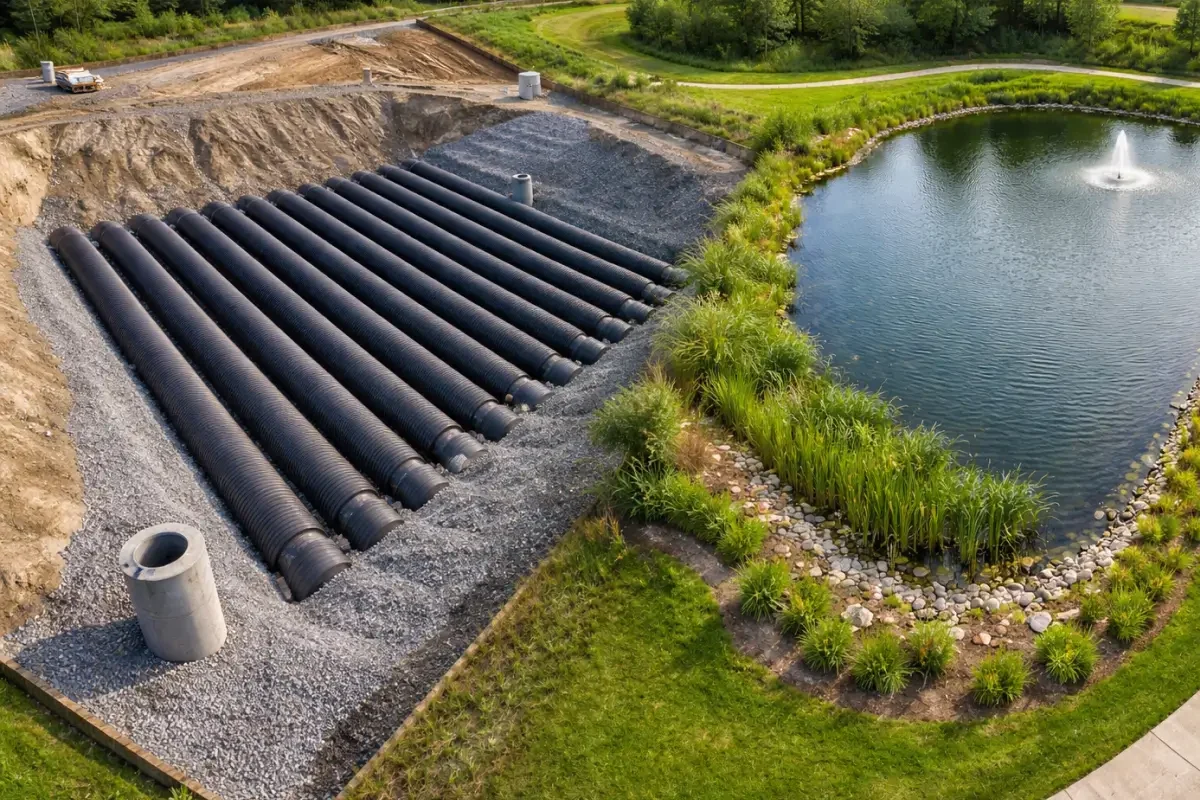
Stormwater management systems are essential in modern urban development. However, the terms “detention” and “retention” are often confused.
While both systems manage runoff, they serve different purposes. Understanding these differences is critical for selecting the right solution.
Solutions like OSD System are specifically designed for detention applications where controlled discharge is required.
What is a Stormwater Detention System?
A detention system temporarily stores stormwater during peak rainfall. It releases water slowly into the drainage network. The goal is to reduce peak flow and prevent flooding.
Water is not stored permanently. After the storm event, the system empties completely.
Unlike detention systems, what is on-site detention? explains how OSD temporarily stores stormwater before controlled discharge rather than reusing it.
What is a Stormwater Retention System?
A retention system stores stormwater for a longer period. It allows water to infiltrate into the ground or evaporate.
These systems are often designed as:
- Ponds
- Basins
- Wetlands
Retention systems help recharge groundwater and support environmental outcomes.
Key Differences Between Detention and Retention Systems
Although both systems manage stormwater, their functions differ significantly.
Storage Duration
- Detention: short-term storage
- Retention: long-term or permanent storage
Water Discharge
- Detention: controlled release
- Retention: minimal or no discharge
Purpose
- Detention: flood control and flow management
- Retention: water reuse and environmental benefits
Space Requirements
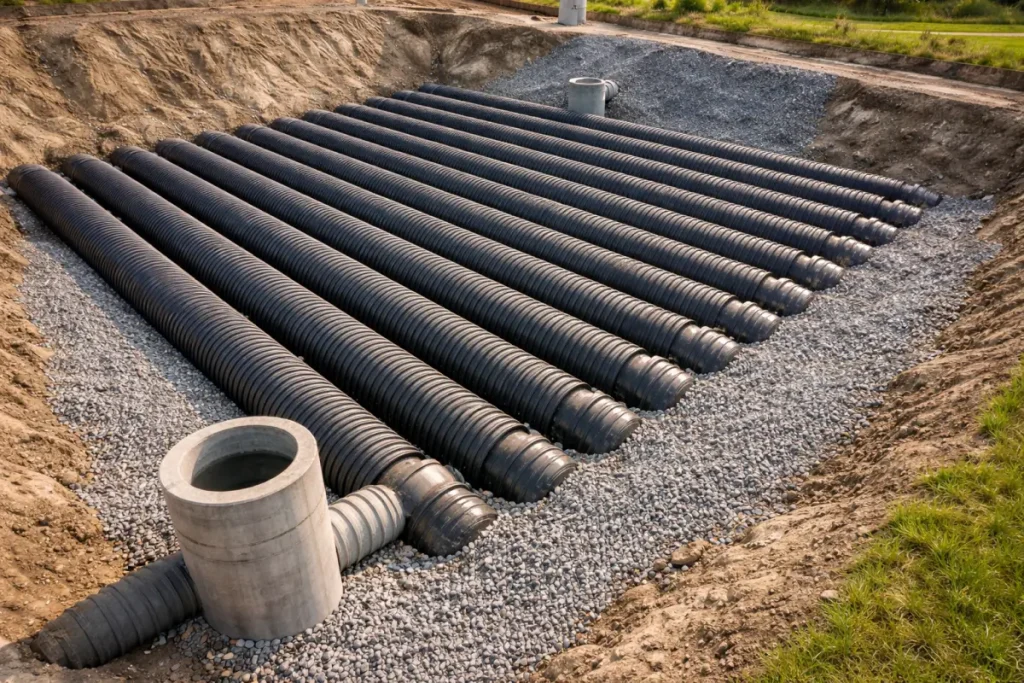
- Detention: often underground and space-efficient
- Retention: requires larger surface areas
When to Use a Detention System
Detention systems are ideal for urban developments where space is limited.
They are commonly used in:
- Commercial buildings
- Residential subdivisions
- Infrastructure projects
These systems are designed to meet strict discharge limits. They protect downstream drainage systems from overload.
To understand how modern detention solutions work, see how Parthenon OSD works.
When to Use a Retention System
Retention systems are suitable when long-term water storage is required.
They are often used in:
- Parks and open spaces
- Rural developments
- Environmental management projects
Retention systems are less common in dense urban areas due to space constraints.
Advantages of Detention Systems
Detention systems offer several practical benefits.
Flood Control
They reduce peak runoff and prevent sudden surges.
Space Efficiency
Many systems are installed underground, saving surface space.
Regulatory Compliance
They help meet council and engineering requirements.
Flexibility
Modern designs can adapt to complex site layouts.
For more on flexible solutions, see benefits of modular stormwater detention systems.
Advantages of Retention Systems
Retention systems also provide important benefits.
Environmental Support
They promote groundwater recharge and biodiversity.
Water Reuse Potential
Stored water can be reused for irrigation or other purposes.
Natural Filtration
Soil and vegetation help filter pollutants.
However, these systems require careful design and maintenance.
Why Detention Systems are More Common in Urban Projects
Urban environments present unique challenges. Space is limited, and runoff volumes are high.
Detention systems address these challenges effectively. They can be installed underground and integrated into existing infrastructure. Modern modular solutions improve efficiency even further.
Systems like Parthenon OSD provide high-capacity storage without requiring large surface areas.
Design Considerations
Choosing between detention and retention systems depends on several factors.
- Site size and layout
- Soil conditions
- Local regulations
- Environmental goals
- Available space
In many cases, detention systems are required to meet council discharge limits. For regulatory guidance, see stormwater detention system design requirements.
Conclusion
Detention and retention systems both play important roles in stormwater management. However, they are designed for different purposes.
Detention systems focus on controlling flow and preventing flooding. Retention systems support long-term storage and environmental outcomes.
Understanding these differences helps ensure the right system is selected for each project. In urban developments, solutions like stormwater detention system offer efficient and reliable stormwater control.
