
Stormwater management is an essential part of modern urban development. As cities continue to grow, more natural surfaces are replaced with roads, buildings, car parks, and other hard landscaping. These surfaces prevent rainwater from soaking into the ground, causing larger volumes of stormwater to flow rapidly into drainage systems.
Without effective stormwater management, heavy rainfall can overwhelm public drainage networks and increase the risk of local flooding. To address this challenge, many developments incorporate On-Site Detention (OSD) systems as part of their stormwater infrastructure.
An OSD system temporarily stores stormwater generated on a property before releasing it into the public drainage network at a controlled rate. Rather than allowing large volumes of water to discharge immediately during a storm, the system slows the flow and helps reduce peak runoff.
Today, OSD systems are widely used in residential developments, commercial buildings, industrial facilities, schools, shopping centres, and public infrastructure projects. They play an important role in supporting sustainable urban development while helping projects meet local drainage requirements.
This guide explains what an On-Site Detention system is, how it works, where it is used, and why it has become an essential component of modern stormwater management.
What is an On-Site Detention (OSD) System?
On-Site Detention, commonly known as OSD, is a stormwater management system designed to temporarily store runoff generated during rainfall events.
Unlike permanent water storage tanks, OSD systems are not intended to retain water for future use. Their primary purpose is to control the rate at which stormwater leaves a property.
During heavy rain, stormwater enters the detention system instead of flowing directly into public drains. The stored water is then gradually released through a controlled outlet after the rainfall begins to subside.
This temporary storage reduces pressure on downstream drainage infrastructure and lowers the risk of flooding.
Most OSD systems are designed by hydraulic engineers to suit the specific characteristics of each development.
The required storage capacity depends on factors such as:
- site size
- roof area
- paved surfaces
- local rainfall data
- drainage requirements
- council regulations
Every project requires an OSD system that matches its expected stormwater runoff. If your project requires a stormwater management solution, our stormwater detention systems are designed to provide reliable on-site storage and controlled discharge.
Why are OSD Systems Important?
Urban development significantly changes the natural water cycle. Before development, much of the rainfall soaks into soil or is absorbed by vegetation. After construction, hard surfaces increase the amount of runoff entering drainage systems.
OSD systems help manage these changes by slowing stormwater discharge.
Their benefits include:
- reducing peak stormwater flows
- lowering flood risk
- protecting public drainage infrastructure
- improving downstream water management
- supporting sustainable development
- assisting with regulatory compliance
Without detention systems, stormwater networks may become overloaded during heavy rainfall. This increases the likelihood of local flooding and infrastructure damage.
How Does an OSD System Work?
Although different designs exist, most OSD systems follow the same operating principles.
Rainfall Is Collected
Rainwater falling onto roofs, driveways, roads, and other hard surfaces is directed into the stormwater drainage system. Instead of immediately entering public drains, the runoff flows into the detention tank.
Temporary Storage
The detention system stores excess stormwater while rainfall continues. Storage capacity is carefully calculated to accommodate expected runoff from the development.
Controlled Discharge
A specially designed outlet restricts the discharge rate. Rather than releasing water immediately, the system gradually empties after the storm has passed.
Overflow Protection
Extreme rainfall events may exceed the design capacity. Most OSD systems include overflow arrangements that safely direct excess water without damaging surrounding infrastructure.
Main Components of an OSD System
Although designs vary, most On-Site Detention systems include several key components.
Detention Tank
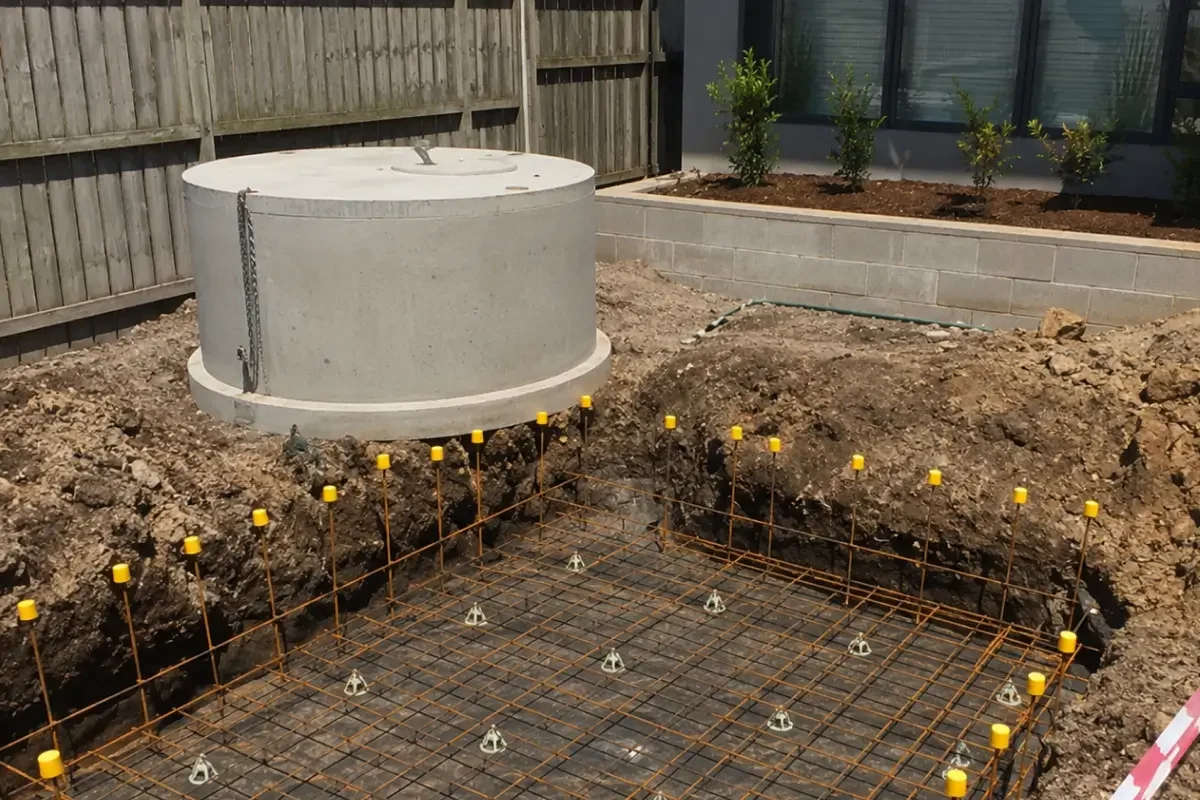
The detention tank provides temporary storage for stormwater during rainfall events. Depending on the project, it may be installed underground or above ground.
Inlet Pipework
Stormwater enters the detention system through inlet pipes connected to roof drainage, surface drains, or site collection systems.
Flow Control Device
The outlet control device regulates how quickly water leaves the detention system. This component is essential because it limits discharge to the rate specified during the engineering design process.
Overflow System
An overflow allows excess water to leave safely during unusually large storm events.
Access Openings
Inspection openings allow maintenance personnel to examine and clean the system when necessary. Proper access simplifies routine maintenance and inspections.
If you’re unsure whether your project requires detention or retention, stormwater detention vs retention systems: key differences explains how the two approaches differ.
Different Types of OSD Systems
Several types of On-Site Detention systems are available to suit different developments, site conditions, and storage requirements.
The most appropriate solution depends on available space, required detention volume, construction methods, and long-term maintenance considerations.
Underground OSD Tanks
Underground detention tanks are among the most common solutions for modern developments. Installing the system below ground preserves valuable surface space for buildings, landscaping, parking areas, or recreational facilities.
These systems are widely used for:
- commercial developments
- apartment buildings
- schools
- shopping centres
- industrial sites
Because they are hidden below ground, underground tanks offer an efficient solution where land availability is limited.
Above-Ground OSD Tanks
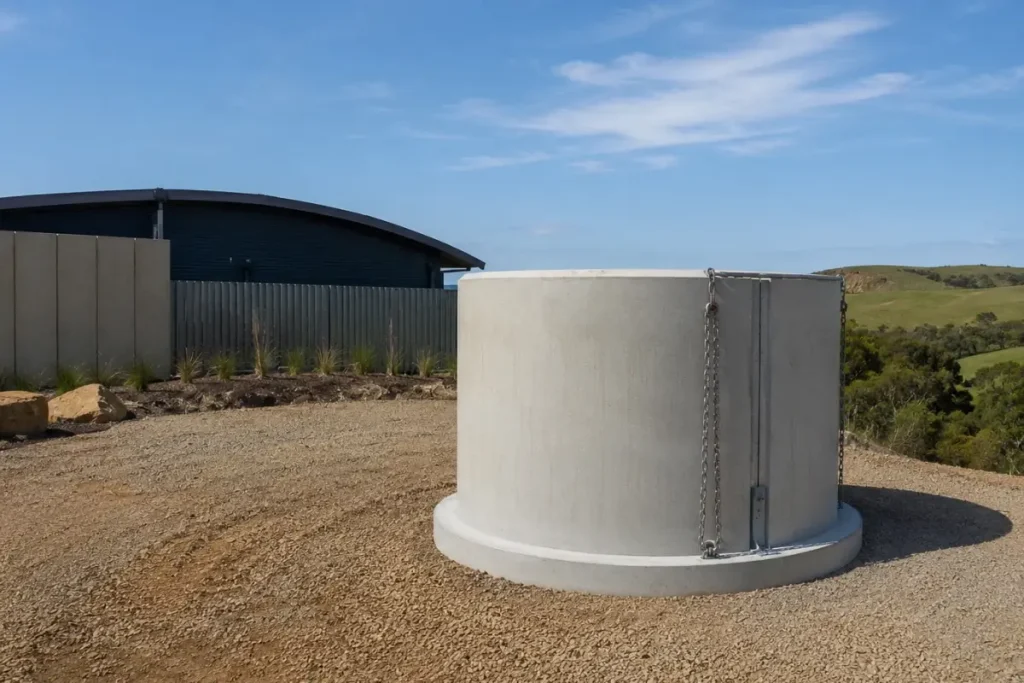
Some developments have sufficient space to install detention tanks above ground. These systems are generally easier to inspect, maintain, and access than underground installations.
Above-ground OSD tanks are commonly used in industrial facilities, warehouses, and infrastructure projects where available land is less restricted.
Modular OSD Systems
Modular detention systems are assembled from prefabricated components that are installed on site. Their modular design provides flexibility for projects requiring different storage capacities or unusual site layouts.
Benefits include:
- scalable storage capacity
- efficient transportation
- faster installation
- flexible layouts
- simplified future expansion
Modular systems are increasingly used in commercial and infrastructure developments because they can be adapted to a wide variety of project requirements.
Concrete Detention Tanks
Concrete OSD tanks are commonly specified for projects requiring large storage capacities and long-term structural durability. Their high strength makes them suitable for permanent infrastructure applications.
However, installation often requires more extensive construction work than modular alternatives.
Plastic Modular Cell Systems
Plastic modular cells create underground storage by combining lightweight structural units. Once installed, the system is usually surrounded by aggregate and wrapped in a geotextile or waterproof membrane, depending on the project design.
These systems are particularly useful where large underground detention volumes are required.
Pipe Detention Systems
Large-diameter pipes can also provide temporary stormwater storage. Instead of using a conventional tank, specially designed pipe networks store runoff before releasing it through a controlled outlet.
Pipe detention systems are often suitable for developments with linear site layouts or limited excavation depth.
Where are OSD Systems Used?
On-Site Detention systems are used across a wide range of developments where stormwater runoff must be carefully managed.
Residential Developments
Many councils require detention systems for new residential subdivisions, townhouse developments, and apartment complexes.
These systems help manage increased runoff created by additional roofs, roads, and paved surfaces.
Commercial Buildings
Office buildings, retail centres, hotels, and mixed-use developments frequently incorporate OSD systems into their stormwater infrastructure.
Detention tanks help protect both the development and surrounding drainage networks during heavy rainfall.
Industrial Facilities
Industrial sites often include large roof areas and extensive hardstand surfaces. These features generate significant stormwater runoff, making detention systems an important part of site drainage design.
Schools and Public Buildings
Educational facilities, community centres, hospitals, and government buildings commonly require stormwater detention to comply with local planning requirements.
Infrastructure Projects
Road projects, transport facilities, public utilities, and municipal developments often incorporate OSD systems as part of broader stormwater management strategies.
OSD Design Considerations
Every On-Site Detention system is designed specifically for its site. There is no standard tank size or universal design because each development generates different runoff volumes.
Engineers typically consider:
- total site area
- roof area
- impermeable surfaces
- rainfall intensity
- required detention volume
- discharge rate
- available installation space
- maintenance access
- local authority requirements
Proper hydraulic design ensures the detention system performs effectively throughout its service life.
OSD systems should always be designed to meet local hydraulic requirements, which are discussed in stormwater detention system design requirements in Australia.
OSD Maintenance Requirements
Although OSD systems operate automatically during rainfall events, they still require regular maintenance. Without routine inspections, sediment and debris may reduce storage capacity or restrict water flow.
Maintenance activities commonly include:
- removing accumulated sediment
- clearing debris from inlets
- inspecting outlet control devices
- checking overflow systems
- inspecting access openings
- confirming structural condition
Routine servicing helps maintain both storage capacity and hydraulic performance. Keeping maintenance records also supports long-term asset management.
Regular inspections and professional maintenance services help ensure OSD systems continue operating as designed throughout their service life.
Common OSD Problems
Like any stormwater asset, detention systems can develop problems if maintenance is neglected. Fortunately, many issues can be identified before they affect system performance.
Sediment Build-Up
Sediment naturally settles inside detention tanks. Over time, excessive accumulation reduces available storage volume and may affect discharge performance.
Blocked Outlets
Leaves, rubbish, or accumulated debris may partially block outlet control devices. Restricted outlets prevent the system from operating as designed and may increase the risk of localised flooding.
Poor Maintenance
The absence of regular inspections often allows small issues to develop into more significant problems. Routine servicing remains one of the most effective ways to protect long-term system performance.
Structural Deterioration
Ageing materials, corrosion, damaged joints, or ground movement may eventually affect structural integrity. Regular inspections help identify deterioration before major repairs become necessary.
Reduced Storage Capacity
Sediment, debris, or unauthorised modifications can reduce the detention volume originally approved during the design process. Maintaining the intended storage capacity is essential for reliable stormwater management.
OSD Compliance and Local Requirements
Many developments require an On-Site Detention system to satisfy local planning and stormwater management requirements.
Specific design criteria vary between councils and regulatory authorities. However, the overall objective remains the same: to limit the rate at which stormwater leaves a site and reduce pressure on public drainage infrastructure.
Before construction begins, an OSD system is typically designed by a qualified engineer using hydraulic calculations based on the site’s characteristics. These calculations determine the required storage volume and controlled discharge rate.
Compliance usually involves consideration of:
- hydraulic design requirements
- approved discharge rates
- required storage capacity
- access for inspections and maintenance
- overflow provisions
- long-term maintenance responsibilities
Maintaining compliance does not end once construction is complete. Regular inspections and maintenance help ensure the system continues to perform as originally designed throughout its service life.
Choosing the Right OSD Solution
Every development has different stormwater management requirements. The most appropriate OSD solution depends on factors such as available space, required detention volume, site layout, maintenance access, and future operational needs.
Underground systems are often preferred where preserving usable surface space is a priority. Above-ground solutions may offer easier maintenance and lower installation complexity where sufficient land is available.
Material selection also influences long-term performance. Engineers consider durability, structural strength, expected service life, and maintenance requirements when selecting the most suitable system.
For projects requiring a modular detention solution, Parthenon OSD provides an efficient approach to stormwater management while supporting flexible installation across a wide range of commercial, industrial, and infrastructure developments.
Selecting the right system during the design stage helps improve long-term reliability, simplify maintenance, and support ongoing compliance with project requirements.
Conclusion
On-Site Detention systems play an essential role in modern stormwater management by temporarily storing runoff and releasing it at a controlled rate. As urban development continues to replace natural ground with hard surfaces, OSD systems help reduce peak stormwater flows, protect drainage infrastructure, and minimise the risk of local flooding.
A well-designed detention system combines appropriate storage capacity, reliable flow control, and regular maintenance to deliver long-term performance. Whether installed beneath commercial buildings, within residential developments, or as part of major infrastructure projects, OSD systems support sustainable site drainage while helping developments meet local stormwater requirements.
Understanding how OSD systems work, where they are used, and how they should be maintained allows property owners, developers, and project teams to make informed decisions throughout the planning and operational life of a development.
