

Stormwater systems play an important role in protecting urban waterways and maintaining the health of natural ecosystems. When rainwater flows across roads, parking lots, rooftops, and other hard surfaces, it collects a wide range of pollutants before entering drainage infrastructure. Without proper treatment, these contaminants can eventually reach rivers, lakes, and coastal environments.
Understanding the common pollutants removed by stormwater systems helps highlight the importance of effective stormwater management and pollution control in modern cities.
How Pollutants Enter Stormwater Systems
Urban environments contain many surfaces that prevent rainwater from naturally filtering into the ground. Instead, water flows across these surfaces and carries pollutants along the way. These contaminants often originate from everyday activities such as traffic, construction, waste disposal, and industrial operations.
Stormwater systems are designed to capture and remove these pollutants before the water is discharged into natural waterways. By filtering and separating contaminants, these systems help protect environmental quality and reduce pollution in downstream ecosystems.
Litter and Large Debris
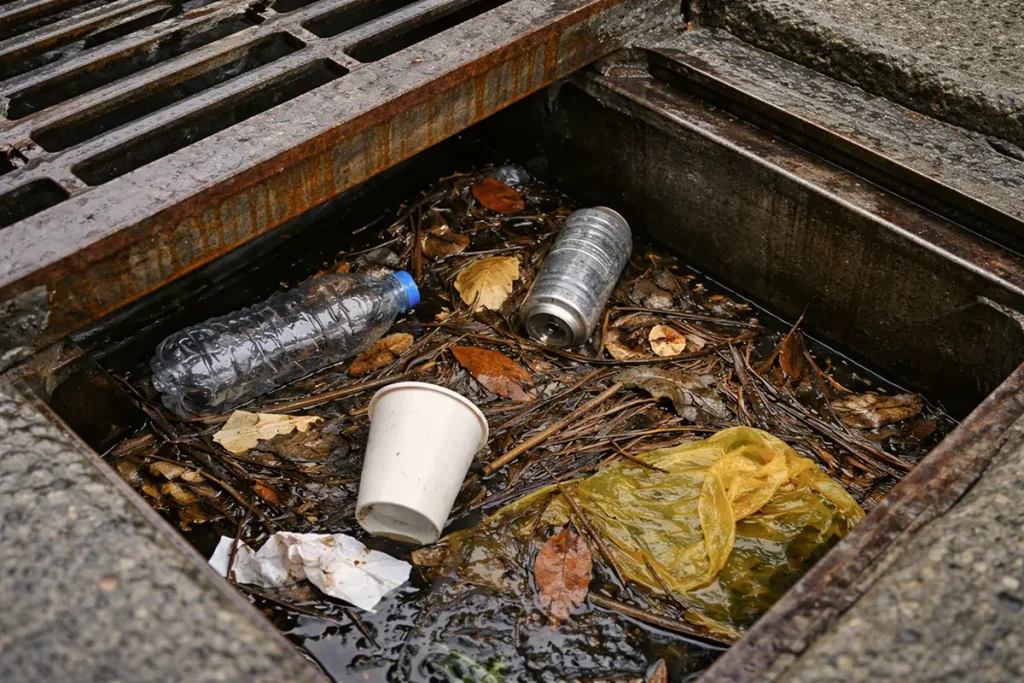
One of the most visible types of pollution found in stormwater runoff is litter and large debris. Urban areas generate large amounts of waste that can be carried into drainage systems during rainfall events.
Common debris captured by stormwater systems includes:
- plastic bottles and packaging
- paper waste and food containers
- leaves and organic debris
- branches and plant material
If not removed, this debris can clog drainage infrastructure and contribute to pollution in rivers and coastal areas.
Sediment and Soil Particles
Sediment is another major pollutant found in stormwater runoff. Soil particles can enter drainage systems from construction sites, exposed land surfaces, and eroding landscapes.
When sediment accumulates in stormwater systems, it may cause several environmental issues:
- increased turbidity in waterways
- reduced water quality for aquatic life
- accumulation of pollutants attached to soil particles
- blockage of drainage channels or pipes
Stormwater treatment systems help capture sediment before it reaches natural water bodies.
Oils and Hydrocarbons
Urban roads and parking areas are major sources of oil-based pollutants. Vehicles often leak small amounts of motor oil, fuel, and other hydrocarbons onto paved surfaces.
During rainfall, these substances are washed into stormwater drainage systems. Oils and hydrocarbons can create serious environmental problems if they enter waterways because they can harm aquatic organisms and reduce oxygen levels in water.
Stormwater treatment infrastructure is designed to separate these contaminants and prevent them from spreading through the drainage network.
Nutrients and Organic Matter
Organic materials and nutrients can also enter stormwater systems. These pollutants may originate from landscaping activities, fertilizer runoff, animal waste, or decomposing plant matter.
When excess nutrients enter rivers or lakes, they can stimulate excessive algae growth. This process, known as eutrophication, can reduce oxygen levels in water and disrupt aquatic ecosystems.
Stormwater filtration and treatment systems help capture organic material before it reaches natural waterways.
Metals and Industrial Pollutants
Stormwater runoff in urban areas may also contain small quantities of metals and other industrial contaminants. These pollutants often originate from vehicle brake dust, tire wear, building materials, and industrial activities.
Common metals found in stormwater include:
- copper
- zinc
- lead
- aluminum
Although these metals may be present in small concentrations, long-term accumulation can affect water quality and aquatic life.
The Role of Stormwater Treatment Infrastructure
Modern stormwater management systems are designed to remove pollutants before water enters the environment. Many systems include specialized filtration or capture technologies that separate debris, sediment, and other contaminants from runoff.
Infrastructure such as GPT Stormwater Systems is commonly used to capture large debris and gross pollutants from stormwater flows. These systems help prevent pollution from reaching rivers, lakes, and coastal ecosystems.
Modern drainage infrastructure often includes gross pollutant capture systems designed to remove debris from stormwater runoff.
Protecting Urban Waterways
Effective stormwater management is essential for protecting the health of urban waterways and surrounding ecosystems. By removing debris, sediment, oils, and other contaminants, stormwater treatment systems help maintain water quality and reduce environmental damage.
Understanding the common pollutants removed by stormwater systems highlights the importance of proper drainage infrastructure in modern cities. With effective stormwater management and pollution control, communities can reduce environmental impacts and protect valuable water resources for the future.
