
Stormwater tanks play an essential role in managing runoff from roofs, roads, car parks, and industrial sites. They temporarily store stormwater, reduce peak flows, and help protect downstream infrastructure from flooding. Like any critical asset, these systems require ongoing maintenance to operate as designed.
Stormwater tank maintenance involves much more than occasional cleaning. A well-planned maintenance program includes inspections, sediment removal, structural assessments, servicing of system components, and performance monitoring. Together, these activities help extend the life of the asset while supporting reliable operation during heavy rainfall.
Although maintenance and inspections are closely related, they serve different purposes. An inspection identifies the current condition of a tank, while maintenance restores or preserves its performance. Understanding this distinction helps property owners, facility managers, and asset operators develop more effective stormwater management strategies.
This guide explains what stormwater tank maintenance involves, how it relates to stormwater tank inspections, which systems require routine servicing, and why preventive maintenance delivers long-term benefits.
What is Stormwater Tank Maintenance?
Stormwater tank maintenance is the ongoing process of inspecting, cleaning, servicing, and monitoring stormwater storage systems. Its purpose is to keep the infrastructure operating safely, efficiently, and in accordance with the original design intent.
Unlike reactive repairs, maintenance focuses on preventing problems before they become costly failures. Regular servicing helps remove materials that naturally accumulate inside tanks and ensures that all components continue functioning correctly.
A typical stormwater tank maintenance program may include:
- Visual inspections
- Sediment removal
- Debris cleaning
- Inspection of inlet and outlet structures
- Overflow checks
- Structural condition assessments
- Overflow checks
- Structural condition assessments
- Pipe and drainage inspections
- Safety inspections
- Performance monitoring
- Maintenance reporting
If your system requires professional servicing, learn more about our stormwater tank maintenance services and tailored maintenance programs.
How Stormwater Tank Maintenance Differs from Stormwater Tank Inspections
Stormwater tank maintenance and stormwater tank inspections are often mentioned together. However, they represent different stages of effective asset management.
| Stormwater Tank Inspection | Stormwater Tank Maintenance |
|---|---|
| Evaluates the tank’s condition | Preserves and restores performance |
| Identifies defects | Removes the causes of deterioration |
| Documents findings | Performs cleaning and servicing |
| Supports maintenance planning | Extends asset life |
| Produces inspection reports | Improves long-term reliability |
An inspection is primarily an assessment process. Inspectors evaluate the structural condition of the tank, identify deterioration, document defects, and recommend corrective actions where necessary.
Maintenance begins after the condition of the system is understood. It includes practical activities such as cleaning accumulated sediment, clearing blocked inlets, servicing equipment, and addressing issues that may reduce system performance.
Neither activity replaces the other. Regular inspections help identify maintenance requirements, while consistent maintenance reduces the likelihood of serious defects developing over time.
Together, they form the foundation of responsible stormwater asset management.
Why Stormwater Tanks Require Regular Maintenance
Stormwater carries far more than rainwater. As runoff moves across hard surfaces, it transports soil, leaves, litter, organic matter, and other contaminants into the drainage network. Much of this material eventually settles inside storage tanks.
Without routine maintenance, these deposits continue to build up and gradually reduce the effectiveness of the system.
Sediment Accumulation
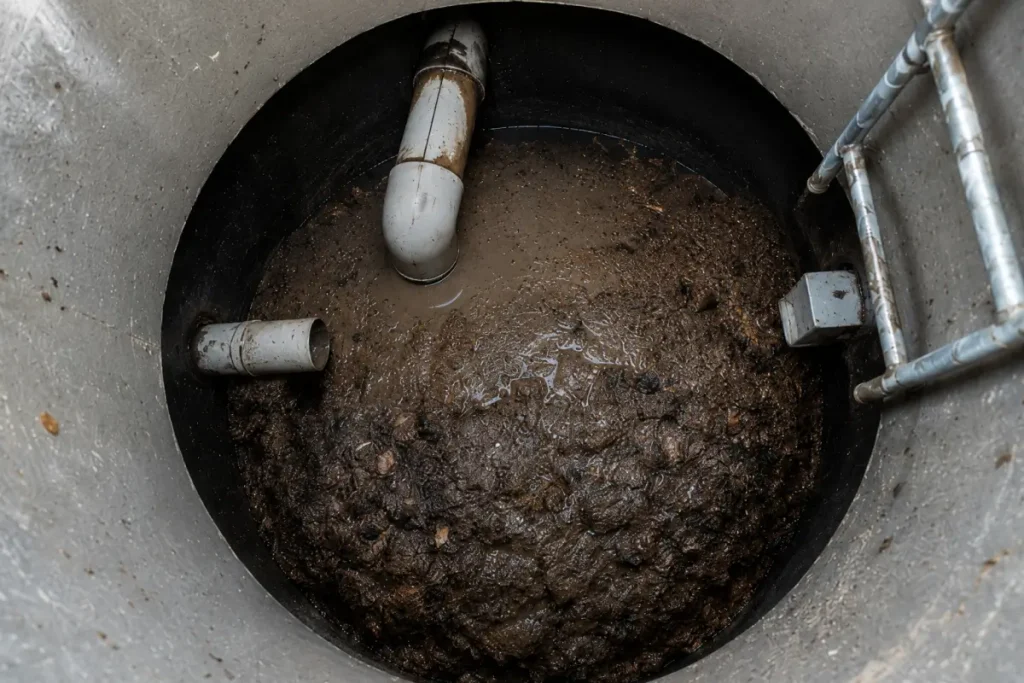
Fine sediments naturally settle at the bottom of the tank. Over time, this layer becomes thicker and reduces the available storage volume.
A reduced storage capacity limits the tank’s ability to manage heavy rainfall and may increase overflow risks.
Organic Matter
Leaves, grass clippings, and other organic materials slowly decompose inside the tank. As decomposition progresses, unpleasant odours may develop, while water quality can deteriorate.
Floating Debris
Plastic waste, branches, packaging materials, and general litter may accumulate near inlet structures or outlet pipes. These materials can restrict water movement and increase the likelihood of blockages.
Biofilm and Algae Growth
Moist environments encourage the development of algae and microbial biofilms. Although some biological growth is expected, excessive accumulation may interfere with maintenance activities and affect water quality.
Corrosion and Material Deterioration
Steel components may corrode over time, while concrete surfaces can experience gradual deterioration under certain environmental conditions. Routine inspections during maintenance help identify early signs of material degradation before they become major structural concerns.
Blocked Inlets and Outlets
Sediment and debris may partially block inlet or outlet structures. Even minor restrictions can reduce hydraulic performance during high-flow storm events.
How a Stormwater Tank Maintenance Program Works
An effective maintenance program follows a structured process rather than relying on occasional cleaning. Each stage supports informed decision-making and helps ensure that maintenance activities address actual system needs.
Step 1: Initial Inspection
The process usually begins with a visual inspection of the tank and associated infrastructure. Inspectors assess structural condition, identify visible defects, evaluate access points, and determine the extent of sediment or debris accumulation.
Step 2: Condition Assessment
The inspection findings are reviewed to determine maintenance priorities. This assessment helps identify which components require immediate attention and which can continue operating without intervention.
Step 3: Cleaning
Loose debris, floating litter, and accumulated organic material are removed from accessible areas. Cleaning improves water movement and prepares the tank for more detailed servicing where required.
Step 4: Sediment Removal
Specialised equipment may be used to remove accumulated sediment from the tank floor. Removing sediment restores available storage volume and improves hydraulic performance.
Step 5: Component Servicing
Maintenance may include servicing inlet structures, outlet controls, overflow systems, pumps, valves, or other mechanical components where installed. Each component is checked to confirm that it continues operating correctly.
Step 6: Final Inspection
Following maintenance, the tank is inspected again to confirm that cleaning and servicing have been completed successfully. Any remaining issues can then be documented for future planning.
Step 7: Maintenance Reporting
The final report records completed maintenance activities, observations, photographs where applicable, and recommendations for future inspections or repairs. Accurate documentation supports long-term asset management and maintenance scheduling.
What is Included in Stormwater Tank Maintenance?
The exact scope depends on the design of the system, its age, surrounding environment, and maintenance history.
However, most maintenance programs include a combination of the following activities:
- Visual condition inspections
- Sediment depth assessment
- Sediment removal
- Debris removal
- Cleaning of inlet structures
- Cleaning of outlet structures
- Overflow inspection
- Pipe inspection
- Drainage flow checks
- Structural observations
- Access hatch inspection
- Ladder and safety equipment inspection
- Water quality observations
- Vegetation management around access points
- Minor maintenance adjustments
- Maintenance documentation
Not every maintenance visit requires every activity. The work should always reflect the current condition and operational requirements of the system.
Stormwater Detention System Maintenance
Stormwater detention systems require regular maintenance to continue managing peak stormwater flows effectively. While detention tanks and retention tanks may appear similar, they are designed for different purposes and have different operational requirements.
A stormwater detention system temporarily stores runoff during rainfall events before releasing it at a controlled rate. This process helps reduce pressure on public drainage networks and lowers the risk of downstream flooding.
Over time, sediment, litter, and organic material accumulate throughout the detention system. If these materials are not removed, they can reduce storage capacity, interfere with flow control devices, and increase the likelihood of blockages.
A comprehensive stormwater detention system maintenance program typically includes:
- Inspection of detention tanks
- Cleaning of inlet and outlet structures
- Sediment removal
- Debris removal
- Inspection of flow control devices
- Overflow assessment
- Pipe and drainage inspections
- Structural condition checks
- Maintenance reporting
Many commercial and industrial sites also incorporate additional stormwater assets that require routine servicing. These may include:
- Gross Pollutant Traps (GPTs)
- Underground detention tanks
- Modular storage systems
- Concrete detention vaults
- Stormwater pits
- Junction pits
- Flow control chambers
- Pump stations
- Connecting pipe networks
Maintaining every component as part of a single maintenance program helps ensure the entire stormwater network performs as intended during significant rainfall events.
Which Stormwater Systems Require Maintenance?
Almost every stormwater storage system benefits from regular maintenance. While the maintenance approach varies depending on the asset, the overall objective remains the same: preserving hydraulic performance and extending service life.
The most common systems include the following.
Underground Concrete Tanks
Concrete tanks are widely used beneath commercial buildings, shopping centres, industrial facilities, and public infrastructure. Routine maintenance focuses on sediment removal, structural observations, inlet cleaning, and monitoring for early signs of deterioration.
Modular Stormwater Storage Systems
Modular cell systems provide large underground storage volumes while maximising available land above ground. Maintenance typically includes inspections through access shafts, sediment monitoring, flushing where appropriate, and checking inlet and outlet performance.
HDPE and Polyethylene Tanks
Plastic stormwater tanks resist corrosion but still require cleaning and inspections. Leaves, sediment, and debris can reduce storage capacity regardless of the tank material.
Steel Stormwater Tanks
Steel tanks may require additional monitoring for corrosion, coating condition, and structural integrity. Preventive maintenance helps identify issues before they affect long-term performance.
Stormwater Retention Tanks
Retention tanks permanently retain a portion of stormwater to improve water quality or support reuse applications.
Maintenance focuses on preserving storage capacity while maintaining acceptable water quality.
Stormwater Detention Tanks
Detention tanks temporarily store runoff before controlled discharge. Their maintenance prioritises unrestricted flow paths, clean outlet structures, and reliable operation during peak rainfall.
Pump Stations
Where pumps form part of the stormwater system, maintenance also includes operational testing, visual inspections, and servicing of mechanical equipment.
Integrated Stormwater Networks
Many commercial developments operate complete stormwater systems rather than individual tanks. These networks may include pipes, pits, chambers, gross pollutant traps, pumps, and underground storage structures. Maintaining every asset together provides a more accurate picture of overall system performance.
Australian Standards and Stormwater Tank Maintenance
Stormwater tank maintenance should always align with the original system design, local regulatory requirements, and recognised industry guidance.
Unlike some fire protection assets, Australia does not have a single national maintenance standard that applies to every type of stormwater tank. Instead, maintenance programs are generally developed using a combination of engineering standards, local council requirements, environmental regulations, and asset management practices.
Depending on the project, maintenance may be informed by:
- AS/NZS 3500 for plumbing and drainage systems
- Local council stormwater management requirements
- Water Sensitive Urban Design (WSUD) guidelines
- Stormwater management plans
- Site-specific engineering specifications
- Environmental protection obligations
- Asset management frameworks
Many councils also require stormwater infrastructure to be maintained so that it continues operating in accordance with its approved design. Regular inspections and documented maintenance provide evidence that the system continues to function as intended.
For commercial and industrial property owners, maintaining accurate maintenance records also supports long-term asset management and future condition assessments.
If you need a professional assessment of your system, explore our stormwater tank inspections for a detailed condition evaluation and expert recommendations.
How Often Should Stormwater Tanks be Maintained?
There is no universal maintenance schedule that suits every stormwater system.
The appropriate frequency depends on several factors, including:
- Surrounding vegetation
- Catchment size
- Local rainfall patterns
- Site activity
- Sediment loading
- Tank size
- System design
- Previous inspection findings
As a general guide, many property managers follow maintenance schedules similar to the following.
| System Type | Typical Maintenance Frequency |
|---|---|
| Commercial buildings | Every 6–12 months |
| Industrial facilities | Site-specific maintenance program |
| High-debris environments | More frequent inspections |
| After major storm events | Additional inspection recommended |
| Older infrastructure | Based on condition assessments |
Rather than relying solely on fixed time intervals, many organisations adopt a risk-based maintenance approach.
Under this model, inspection results determine when maintenance should occur. Systems with minimal sediment accumulation may require less frequent servicing, while heavily loaded systems benefit from shorter maintenance intervals.
This approach improves resource allocation while maintaining reliable system performance.
Benefits of Routine Stormwater Tank Maintenance
Preventive maintenance offers significant operational and financial benefits throughout the life of a stormwater asset.
Instead of waiting for failures to occur, routine servicing helps preserve system performance while reducing unexpected maintenance costs.
Some of the key benefits include:
Preserves Storage Capacity
Removing accumulated sediment restores the available storage volume inside the tank. This allows the system to perform closer to its original hydraulic design.
Reduces Blockage Risks
Cleaning inlet structures, outlet pipes, and overflow components reduces the likelihood of restricted water flow during heavy rainfall.
Extends Asset Life
Routine maintenance slows deterioration by identifying small issues before they develop into larger structural problems. Early intervention often reduces long-term repair costs.
Supports Reliable Hydraulic Performance
Stormwater systems are designed to manage specific runoff volumes. Keeping flow paths clear helps maintain predictable system behaviour during storm events.
Improves Water Quality
Removing sediment and organic material helps reduce pollutant build-up inside the system. Cleaner tanks generally contribute to better stormwater quality throughout the drainage network.
Supports Compliance
Documented maintenance demonstrates that stormwater infrastructure is being managed responsibly. Maintenance records may also support inspections, audits, and broader asset management programs.
Reduces Emergency Repairs
Preventive maintenance identifies developing issues before they cause operational failures. This reduces unexpected downtime and helps minimise disruption to site operations.
Protects Downstream Infrastructure
Properly maintained stormwater systems reduce the likelihood of uncontrolled overflows that may affect downstream drainage assets.
Improves Inspection Outcomes
A clean and accessible tank allows inspectors to perform more accurate condition assessments. Potential defects are easier to identify when sediment and debris do not obscure structural surfaces.
Common Signs That Stormwater Tank Maintenance Is Overdue
Stormwater tanks often continue operating even when maintenance has been delayed. However, their performance gradually declines as sediment and debris accumulate. Identifying early warning signs allows maintenance to be scheduled before minor issues become costly repairs.
The following indicators often suggest that a stormwater tank requires attention.
Excessive Sediment Build-Up
A thick layer of sediment on the tank floor is one of the most common maintenance issues. As sediment accumulates, it reduces the available storage volume. During heavy rainfall, the system may reach capacity sooner than intended.
To better understand the impact of sediment on storage capacity and hydraulic performance, read our article on How sediment buildup affects stormwater tank performance.
Blocked Inlets or Outlets
Leaves, litter, branches, and other debris can restrict the flow of water through inlet and outlet structures. Even partial blockages may affect how quickly the tank fills and empties during storm events.
Routine cleaning helps maintain unrestricted flow throughout the system.
Standing Water in Unexpected Areas
Water pooling around access points, overflow structures, or nearby drainage infrastructure may indicate reduced system performance. The cause could include blocked pipework, excessive sediment, or damaged drainage components.
An inspection helps determine the underlying issue before maintenance begins.
Unpleasant Odours
Stormwater tanks naturally contain organic material. However, excessive odours often indicate that leaves, vegetation, or other debris have been decomposing for an extended period.
Cleaning accumulated organic matter helps improve internal conditions and supports better water quality.
Visible Floating Debris
Plastic waste, leaves, and organic material should not remain inside the tank for long periods. Floating debris may interfere with outlet structures and contribute to blockages during high-flow events.
Removing debris is one of the simplest ways to improve system performance.
Corrosion or Surface Deterioration
Metal components should be inspected for corrosion, while concrete surfaces should be monitored for cracking, spalling, or other signs of deterioration.
Early identification allows maintenance or repairs to be planned before damage becomes more extensive.
Slow Drainage After Rainfall
A detention tank is designed to gradually release stored stormwater after rainfall. If water remains inside the system much longer than expected, blocked outlets or restricted flow paths may be affecting performance.
Further inspection can identify whether cleaning or repairs are required.
Damaged Access Covers and Safety Components
Access hatches, ladders, safety rails, and confined space entry points should remain in good condition. Damaged safety equipment creates unnecessary risks during future inspections and maintenance activities.
Best Practices for Effective Stormwater Tank Maintenance
A successful maintenance program is based on consistency rather than reacting to visible problems. Preventive maintenance helps preserve system performance while reducing the likelihood of unexpected failures.
The following practices support long-term reliability.
Schedule Regular Inspections
Maintenance should begin with periodic inspections rather than waiting for obvious signs of deterioration. Routine inspections identify developing issues before they affect system performance.
Our stormwater tank inspection checklist outlines the essential inspection points that help identify maintenance needs before they become costly problems.
Remove Sediment Before Capacity Is Reduced
Sediment accumulation is gradual, making it easy to overlook. Removing sediment before it occupies a significant portion of the tank helps maintain the designed storage volume.
Keep Inlets and Outlets Clear
Blocked flow paths reduce hydraulic efficiency and increase the risk of overflow during major rainfall events. Cleaning inlet and outlet structures should be part of every maintenance program.
Inspect After Major Storm Events
Large storms may introduce significant amounts of debris into the stormwater network. An inspection after severe weather helps identify new blockages, erosion, or structural damage.
Maintain Accurate Records
Maintenance reports provide valuable information about the condition of the asset over time. Recording sediment depth, observed defects, completed maintenance, and inspection dates supports better long-term planning.
Address Minor Issues Early
Small defects rarely remain small. Prompt maintenance reduces the likelihood of larger repairs while extending the service life of the infrastructure.
Use Qualified Personnel
Stormwater tanks often involve confined spaces and specialised equipment. Inspections and maintenance should be carried out by appropriately trained personnel following relevant workplace safety procedures.
Conclusion
Stormwater tanks are designed to manage runoff efficiently, but their long-term performance depends on consistent maintenance. Sediment, debris, and organic matter accumulate naturally over time, gradually reducing storage capacity and affecting hydraulic performance if left unmanaged.
An effective stormwater tank maintenance program combines routine inspections, cleaning, sediment removal, and ongoing monitoring. While inspections identify the condition of the asset, maintenance restores and preserves its ability to perform as intended. Together, these activities support informed asset management and reduce the risk of unexpected failures.
Regular maintenance also benefits the broader stormwater network. Clean tanks, clear flow paths, and well-maintained components help detention systems operate efficiently during heavy rainfall while protecting downstream infrastructure from unnecessary stress.
Whether the system serves a commercial facility, industrial site, or public infrastructure, a proactive maintenance strategy contributes to longer asset life, improved operational reliability, and more predictable performance over time.
