
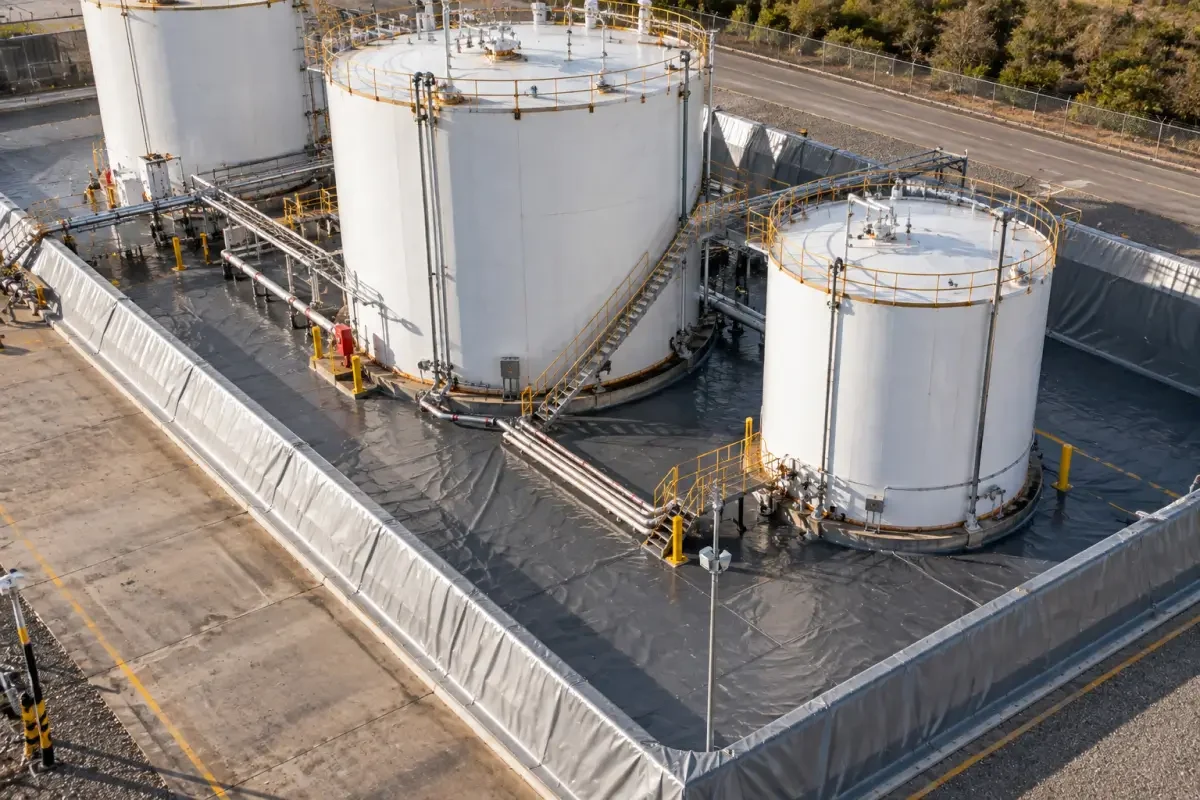
Fuel storage creates environmental and operational risks when leaks or spills occur. Even a small release can affect soil, drainage systems, groundwater, or nearby surface water. Fuel spill containment systems provide a secondary barrier when primary storage fails.
However, containment involves more than placing a barrier around a fuel tank. Capacity, materials, drainage, location, maintenance, and site conditions can all affect containment performance.
Australian requirements also vary according to the fuel, facility, storage volume, and relevant jurisdiction. This article explains the main considerations surrounding fuel tank spill containment requirements in Australia.
What is Fuel Tank Spill Containment?
Fuel tank spill containment is designed to control fuel released from its primary storage system. The primary containment is usually the tank, container, pipework, or equipment holding the fuel.
Secondary containment provides another layer of protection if the primary system leaks or fails.
Common secondary containment solutions can include:
- bunded storage areas;
- double-walled tanks;
- dedicated spill containment tanks;
- sumps and collection areas;
- other impervious containment structures.
The appropriate system depends on the type of fuel storage and site conditions. EPA Victoria describes secondary containment as one element of effective spill and leak prevention.
It should work alongside appropriate storage design, maintenance, training, and spill response procedures.
Why is Spill Containment Important for Fuel Tanks?
Fuel can escape from storage infrastructure in several ways. A tank may develop a leak because of corrosion, physical damage, or component failure. Spills can also occur during filling, transfer, or maintenance activities.
Without suitable containment, released fuel can move beyond the immediate storage area.
It may reach:
- surrounding soil;
- groundwater;
- stormwater systems;
- drains;
- nearby waterways;
- other sensitive areas.
EPA Victoria notes that petroleum leaks can contaminate soil, groundwater, surface water, and surrounding infrastructure. Containment provides an additional barrier between stored fuel and the surrounding environment.
It can limit the spread of a release and make recovery easier. This makes containment an important part of wider fuel storage risk management.
Purpose-built fuel spill tanks provide a practical containment solution for sites requiring reliable secondary fuel containment.
Understanding Fuel Tank Spill Containment Requirements in Australia
There is no single containment rule that applies identically to every Australian fuel storage site. Requirements can depend on the jurisdiction, facility, fuel classification, storage volume, and system configuration. Relevant Australian Standards may also apply to particular storage arrangements.
For example, AS 1940 addresses the storage and handling of flammable and combustible liquids. Environmental authorities can also establish requirements or guidance relevant to fuel storage and spill prevention. EPA Victoria advises businesses storing liquids to assess pollution risks and implement appropriate controls.
NSW EPA similarly recommends storing fuels and other liquids away from stormwater drains in suitable contained areas. Some facilities may also operate under additional licensing or regulatory requirements.
For this reason, containment should be considered within the specific regulatory context of each site.
Primary and Secondary Fuel Containment
Understanding the difference between primary and secondary containment helps explain how spill protection works.
Primary Containment
Primary containment directly holds the fuel during normal operation.
Examples include:
- fuel storage tanks;
- drums;
- containers;
- pipes;
- associated vessels.
Its purpose is to prevent fuel from escaping during normal storage and handling.
Secondary Containment
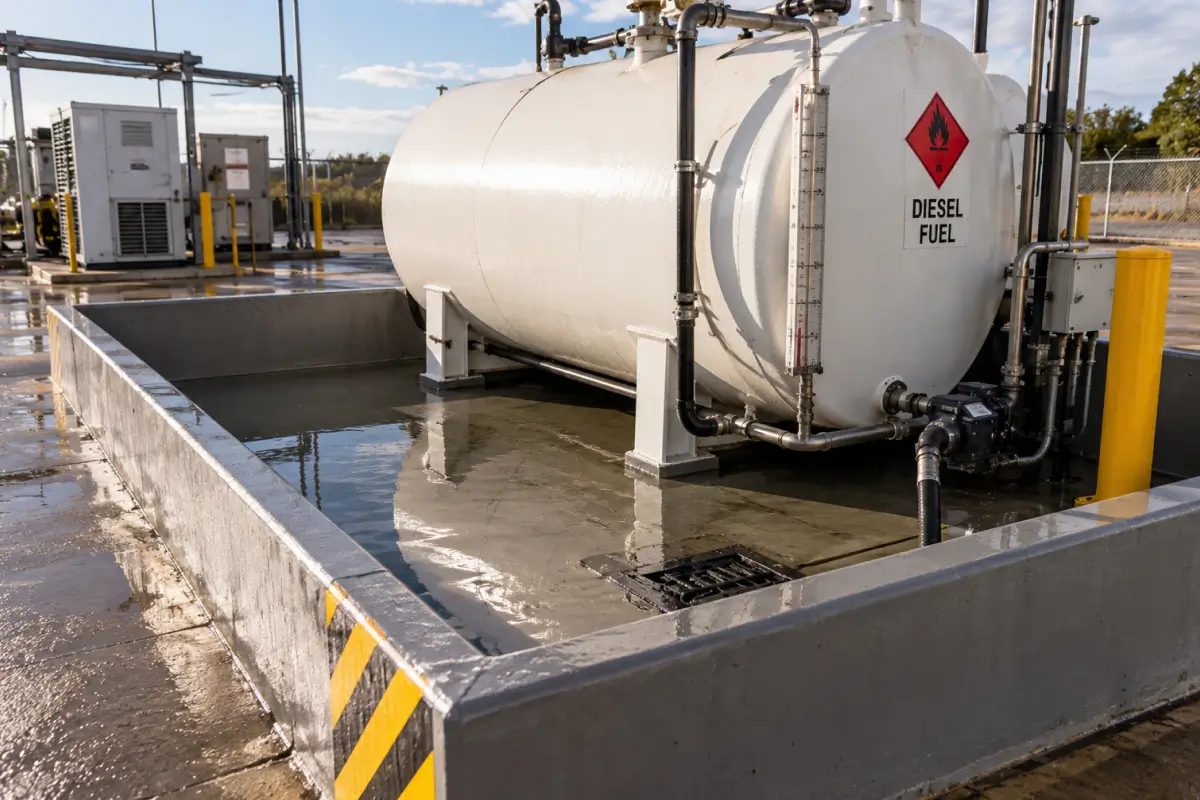
Secondary containment becomes important when fuel escapes from the primary system. A bund surrounding a storage tank is a common example. A double-walled tank can provide another form of secondary protection.
EPA Victoria identifies bunding and double-walled tanks as examples of additional containment controls. The two containment levels therefore perform different functions.
Primary containment stores the fuel. Secondary containment helps control a release when the primary barrier no longer contains it.
For a broader overview of containment systems and their applications, read our guide to fuel spill containment tanks.
How Much Spill Containment Capacity is Required?
Containment capacity is one of the most important design considerations. The system needs sufficient usable volume to manage the release it is designed to contain. However, the required capacity should not be assumed from one general percentage.
Requirements can vary according to the storage arrangement and applicable rules. NSW EPA provides a general bunding example for typical industrial and commercial liquid storage. Its guidance states that a bund should contain the largest container’s contents, plus 10 percent.
However, this should not be treated as a universal requirement for every fuel storage installation. Different facilities and dangerous goods arrangements may have additional requirements. Relevant Australian Standards and local requirements should therefore be checked for the specific installation.
Usable capacity is also important. A containment area may have sufficient theoretical volume but reduced practical capacity. Rainwater, sediment, debris, equipment, or other materials can occupy available space.
Containment capacity therefore needs to remain available during operation.
What can Affect Required Containment Capacity?
Tank size is an obvious consideration, but it is not the only factor. Fuel storage arrangements can become more complicated when several tanks share one containment system.
Important considerations can include:
- individual tank capacities;
- total storage volume;
- number of tanks;
- tank arrangement;
- stored liquids;
- site drainage;
- rainfall exposure;
- containment design;
- applicable standards;
- regulatory requirements.
The intended purpose of the containment system must also remain clear. A system designed for one storage arrangement may not remain suitable after site modifications.
Adding another tank can change the risk profile. Increasing storage capacity may have similar consequences.
Containment requirements should therefore be reconsidered when the fuel storage configuration changes.
Fuel Spill Containment Tanks and Bunded Areas
Secondary containment can take several forms. Traditional bunding creates a contained area around fuel storage infrastructure. Bund walls and the base create a barrier intended to prevent released liquid from spreading.
NSW EPA describes bunding as an impermeable barrier used to retain spilled or leaked liquids. Dedicated fuel spill containment tanks can provide another approach in suitable applications.
The appropriate solution depends on the wider storage system and site requirements. Space can influence the decision. Drainage conditions, accessibility, existing infrastructure, and storage volumes can also be relevant.
The important principle is effective secondary containment. The chosen system must be suitable for the fuel and the conditions in which it operates.
Material Compatibility and Containment
Fuel containment materials need to remain suitable for the liquids they may encounter. This consideration applies to both the primary tank and secondary containment system. An unsuitable material can deteriorate after repeated or prolonged exposure.
The containment surface should also prevent released liquids from escaping into surrounding areas. NSW EPA guidance states that bunds should be impermeable to the liquid stored within them.
Material selection may involve consideration of:
- chemical compatibility;
- corrosion resistance;
- expected service life;
- environmental exposure;
- physical loading;
- joints and connections;
- protective coatings.
Coatings may provide additional protection for certain metallic surfaces. However, coated fuel spill tanks still require appropriate condition monitoring.
A coating can deteriorate, become damaged, or separate from the underlying surface. Once damage develops, exposed material may become more vulnerable to corrosion.
Material suitability should therefore be considered throughout the system’s service life.
Above-Ground Fuel Tanks and Spill Containment
Above-ground fuel storage creates particular containment considerations. Leaks may become visible relatively quickly, but released fuel can also spread across surrounding surfaces. Site layout therefore matters.
Fuel storage should consider nearby drainage systems, waterways, soil, and other sensitive areas. EPA Victoria recommends considering stormwater drains, groundwater, surface water, and nearby infrastructure when locating outdoor storage tanks. The surrounding surface also affects how a spill behaves.
An impermeable contained surface can help prevent fuel from entering underlying soil. The containment system must also remain accessible for inspection and maintenance.
Pipes, valves, connections, and filling points can introduce additional spill risks. Containment planning should therefore consider the complete storage arrangement rather than the tank alone.
Diesel Tank Containment Considerations
Diesel tank containment follows the same general principle of preventing released fuel from spreading beyond the storage area. However, the exact requirements depend on the installation.
Tank capacity, site conditions, storage configuration, and local regulations can all influence containment arrangements.
Diesel storage may occur at:
- industrial facilities;
- construction sites;
- transport depots;
- agricultural properties;
- mining operations;
- commercial facilities;
- backup power installations.
Each environment can introduce different risks. A construction site may experience frequent equipment movement and changing ground conditions.
A permanent industrial facility may have larger tanks and more complex transfer infrastructure. Outdoor diesel storage can also expose containment areas to rainfall.
The appropriate containment solution should reflect these site-specific conditions.
Rainwater and Outdoor Fuel Containment
Rainwater is an important consideration for outdoor containment systems. An uncovered bund can collect water during rainfall. That water occupies space intended to contain a potential fuel release.
Heavy or repeated rainfall can therefore reduce available containment capacity. NSW EPA recommends covering bunded storage areas where practical to prevent rainwater accumulation. The agency also advises removing rainwater to maintain bund capacity.
However, accumulated water should not simply be released without considering possible contamination. Water within a fuel containment area may contain hydrocarbons or other contaminants.
Its condition should be assessed before disposal according to applicable site procedures and requirements. Rainwater management should therefore form part of routine containment management.
Drainage Around Fuel Storage Areas
Drainage can determine where spilled fuel travels. A containment system should prevent uncontrolled movement toward stormwater infrastructure or sensitive areas. This becomes especially important where storage areas are located near drains.
NSW EPA recommends storing fuels and other liquids away from stormwater drains where possible. Drainage design should also consider water entering the containment area. A poorly managed drain can create a pathway for contamination to leave the site.
Some facilities may use isolation systems to prevent contaminated water from reaching external drainage. NSW EPA identifies maintained stormwater cut-off valves as an important pollution control at facilities storing hazardous liquids.
Drainage should therefore be considered alongside containment rather than as a separate issue.
Fuel Transfer and Filling Areas
Fuel does not only escape from storage tanks. Transfer operations can create significant spill risks. Fuel may be released when tanks are filled, emptied, or connected to other equipment.
Connections and hoses can fail. Overfilling can also result in fuel leaving the primary storage system. Containment planning should therefore consider transfer and filling areas.
NSW EPA guidance for fuel handling areas includes bunding around tank fill connections and spill containment enclosures. The specific requirements depend on the facility and storage system.
However, focusing only on the main tank can leave other potential release points inadequately managed. A broader assessment considers where fuel moves throughout the site.
Inspection and Maintenance of Fuel Spill Containment Systems
A containment system needs to remain functional after installation. Physical deterioration can reduce its ability to control a future spill.
Regular inspection can identify developing conditions before significant deterioration occurs.
Areas requiring attention can include:
- containment walls;
- tank surfaces;
- coatings;
- joints;
- seals;
- valves;
- drainage controls;
- pipe connections;
- accumulated liquids;
- debris.
Cracks or damaged joints may affect an otherwise sound containment structure. Corrosion can also affect metallic tanks and associated components.
Routine maintenance should address identified problems before they progress. NSW EPA expects bunds used at relevant liquid waste facilities to remain maintained and free from capacity-reducing solids or liquids.
Maintenance therefore protects both physical condition and usable containment capacity.
Common Problems with Fuel Spill Containment
Containment systems can lose effectiveness gradually. The problem may not always involve a major structural failure.
Small changes can accumulate over time.
Corrosion
Metal components can corrode after prolonged exposure to moisture and environmental conditions. Damage to protective coatings can increase exposure of the underlying metal.
Cracking
Concrete containment structures can develop cracks. The significance depends on their location, size, cause, and progression.
Damaged Coatings
Protective coatings can wear, blister, crack, or become physically damaged. Damaged areas may expose the underlying surface.
Accumulated Rainwater
Rainwater reduces available containment capacity. It can also become contaminated after contact with fuel residues.
Sediment and Debris
Solid material can occupy containment volume and obstruct drainage controls. Regular cleaning helps preserve usable capacity.
Damaged Connections
Pipes, valves, fittings, and transfer connections can deteriorate or become damaged. These components can create release points outside the main tank body.
Identifying such conditions supports timely maintenance and repair planning.
Spill Containment and Underground Fuel Storage
Underground petroleum storage presents different challenges from above-ground tanks. Leaks may remain hidden for extended periods. Released fuel can migrate through soil and groundwater before becoming visible.
EPA Victoria notes that undetected petroleum leaks can travel considerable distances from their source. Underground petroleum storage systems therefore require specific approaches to leak prevention and monitoring. Requirements can also differ between Australian jurisdictions.
For example, NSW regulates underground petroleum storage systems through dedicated requirements. Sites using these systems must maintain a Fuel System Operation Plan containing specified information and procedures.
Above-ground spill containment principles should not automatically be applied to underground systems. The appropriate regulatory framework must be considered separately.
Planning Fuel Spill Containment for a Site
Effective containment planning starts with understanding the entire fuel storage arrangement. Tank capacity is only one part of that assessment.
The site should also consider where a release could occur and where spilled fuel could travel.
Important questions include:
- What fuel will be stored?
- How much fuel will the site hold?
- How many tanks are involved?
- Where are filling and transfer points located?
- Are stormwater drains nearby?
- Is the storage exposed to rainfall?
- What surfaces surround the tanks?
- How will collected liquids be managed?
- How will the containment system be inspected?
- Which standards and regulatory requirements apply?
Site changes should also trigger reconsideration of existing controls. A containment system suitable for the original installation may not suit an expanded storage arrangement.
Additional tanks can change capacity requirements and spill pathways. New drainage infrastructure can also alter environmental risks.
Containment planning should therefore continue throughout the life of the facility.
Fuel Spill Containment as Part of Wider Risk Management
Fuel spill containment is important, but it is not the only control required. Effective fuel storage combines several layers of protection. These can include suitable primary storage, secondary containment, leak detection, inspection, maintenance, and spill response planning.
Staff training can also influence how quickly a spill is identified and managed. EPA Victoria specifically describes secondary containment as one component of broader spill prevention and site management. This layered approach recognises that no individual control eliminates every risk.
The tank helps prevent fuel from escaping. Secondary containment limits movement if a release occurs. Inspection helps identify deterioration. Maintenance addresses developing problems.
Emergency procedures support an organised response when an incident occurs. Together, these measures provide stronger protection than containment alone.
Conclusion
Fuel spill containment helps reduce the environmental consequences of leaks and accidental releases. However, effective containment involves more than installing a bund or secondary tank. Capacity, materials, drainage, rainfall, storage configuration, and maintenance all require consideration.
Australian fuel tank spill containment requirements can also vary between jurisdictions and storage arrangements. Relevant standards, environmental requirements, and site-specific obligations should therefore be confirmed for each installation. Well-managed fuel spill containment tanks and other secondary systems provide an important additional layer of protection.
Their condition and usable capacity must also be maintained throughout their service life. A site-specific approach helps ensure containment remains appropriate as storage infrastructure and operating conditions change.
