

Stormwater systems are designed to manage runoff, reduce flooding risk, and protect downstream waterways. When these systems perform as intended, they regulate water flow and limit the transfer of pollutants into the environment. However, over time, many sites experience stormwater system performance issues that reduce efficiency and compromise environmental outcomes.
Understanding what causes these performance problems is essential for identifying risks early and maintaining reliable stormwater infrastructure.
Why Stormwater System Performance Matters
Stormwater systems play a critical role in urban water management. Poor performance can lead to increased flood risk, uncontrolled pollutant discharge, and long-term damage to downstream ecosystems.
Unlike sudden system failures, performance issues often develop gradually. Reduced capacity, restricted flow paths, and declining water quality may go unnoticed until visible problems appear. By the time impacts are obvious, remediation can become complex and costly.
Common Causes of Stormwater System Performance Issues
Several factors contribute to declining stormwater system performance. In most cases, these issues are not caused by design flaws, but by gradual changes within the system.
Common contributors include:
- accumulation of sediments
- build-up of organic debris
- trapped litter and gross pollutants
- reduced hydraulic capacity
- changes in upstream land use
As these factors combine, system efficiency steadily decreases.
How Sediment Accumulation Affects System Efficiency
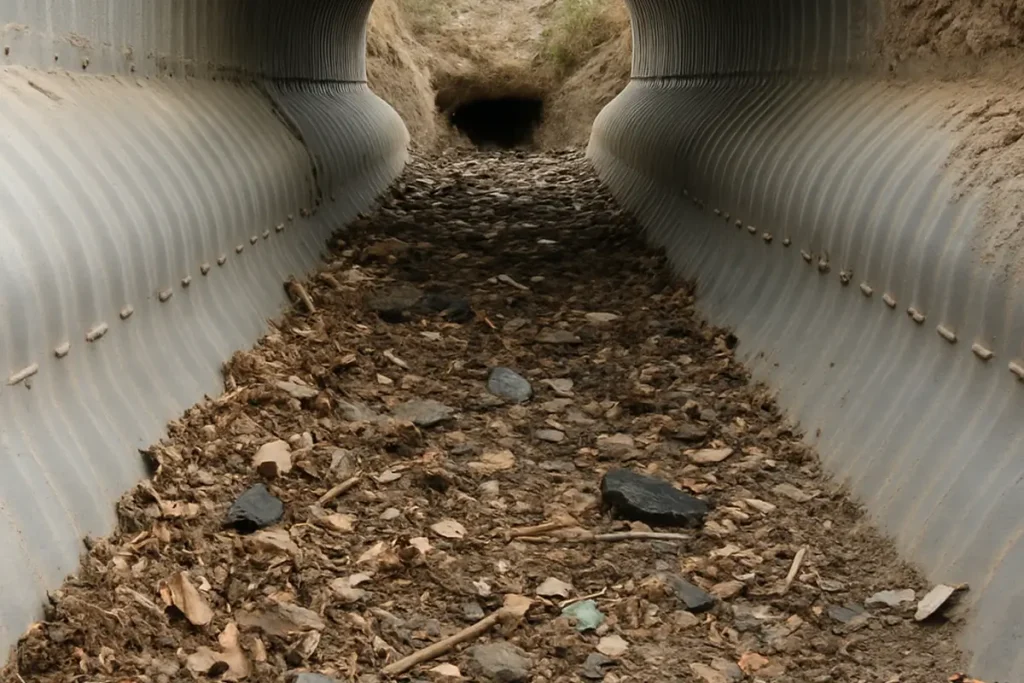
Sediment build-up is one of the most common causes of stormwater system performance issues. Fine particles are carried into tanks and treatment structures during rainfall events and settle over time.
As sediment accumulates, it:
- reduces available storage volume
- alters designed flow paths
- limits detention effectiveness
- increases turbulence during peak flows
Even moderate sediment levels can significantly reduce system performance if left unmanaged.
Sediment accumulation within stormwater management systems gradually reduces storage capacity and alters flow behaviour, leading to long-term performance inefficiencies.
Water Quality Consequences of Poor System Performance
Stormwater system performance issues do not only affect hydraulics. They also have a direct impact on water quality. Reduced flow efficiency allows pollutants to remain within systems longer, increasing the risk of contaminant release during high-flow events.
Poor performance can result in:
- elevated sediment discharge
- increased nutrient loading
- hydrocarbon transport
- downstream ecosystem stress
Maintaining system efficiency is therefore closely linked to protecting water quality outcomes.
How Performance Issues Develop Over Time
One of the challenges with stormwater system performance issues is that they often develop slowly. Systems may continue operating while gradually deviating from their original design intent.
Performance decline is commonly influenced by:
- cumulative sediment loading
- infrequent inspection cycles
- increased catchment runoff
- changing rainfall patterns
Without early detection, small inefficiencies can compound into significant operational limitations.
Importance of Understanding Performance Indicators
Recognising early signs of stormwater system performance issues allows asset owners and managers to respond before problems escalate. Indicators such as reduced discharge capacity, visible sediment accumulation, or altered flow behaviour often signal declining performance.
A clear understanding of how systems respond to runoff events supports better decision-making and long-term infrastructure planning across urban environments.
Key Takeaways
- Stormwater system performance issues often develop gradually
- Sediment and debris are primary contributors to reduced efficiency
- Performance decline affects both hydraulic function and water quality
- Early identification helps reduce long-term environmental risk
- Understanding system behaviour supports sustainable stormwater management
Stormwater systems are essential assets within urban infrastructure. Identifying and addressing performance issues early helps ensure these systems continue to protect waterways, manage runoff effectively, and support long-term environmental goals.
