
Fuel spill containment systems require regular inspections and maintenance to operate safely. Poor maintenance may increase the risk of fuel leaks, environmental contamination and costly system failures.
Routine servicing helps improve containment reliability and long-term operational performance. Many industrial facilities use scheduled maintenance procedures to support safer fuel storage practices.
Why Fuel Spill Tank Maintenance Matters
Fuel spill tanks are exposed to weather, fuel exposure and daily operational demands. Over time, containment systems may develop corrosion, leaks or structural damage. Routine maintenance helps identify small problems before major failures occur.
Well-maintained systems also improve environmental protection and operational safety. Many facilities rely on fuel spill tanks for long-term fuel storage reliability.
How Often Should Fuel Spill Tanks be Inspected?
Inspection schedules depend on fuel storage conditions and operational requirements. High-use industrial sites may require more frequent inspections and servicing.
Many facilities perform:
- Routine visual inspections
- Monthly operational checks
- Scheduled maintenance servicing
- Annual structural assessments
Regular inspections help reduce environmental and operational risks. Some facilities also integrate broader stormwater tank maintenance programs into infrastructure servicing schedules.
Fuel Spill Tank Maintenance Checklist
A structured maintenance checklist helps improve inspection consistency and long-term system performance.
Inspect Tank Integrity
Check the tank for visible damage, cracks or corrosion. Structural deterioration may increase spill and containment risks.
Pay close attention to tank seams, joints and access points.
Check for Fuel Leaks
Inspect the system for fuel leaks or unusual fluid accumulation. Small leaks may become serious environmental problems if ignored.
Leak monitoring systems should also be tested regularly.
Inspect Pipes and Connections
Fuel pipes and fittings should remain secure and free from visible damage. Loose or damaged connections may increase containment risks.
Pipe inspections are especially important for underground fuel systems. Many industrial facilities review fuel spill tank requirements when assessing older containment infrastructure.
Review Secondary Containment Areas
Secondary containment systems should remain clean and fully operational. Inspect bunds, containment pits and drainage controls for damage or blockages.
Standing water or debris may reduce containment effectiveness.
Inspect Drainage Systems
Drainage infrastructure should allow safe water management without spreading contamination. Blocked drainage systems may increase overflow risks during heavy rainfall.
Check Access Points and Safety Equipment
Inspection access points should remain clear and secure. Damaged lids, covers or barriers may create operational and safety risks.
Safety signage and spill response equipment should also be reviewed regularly.
Maintenance for Above-Ground and Underground Systems
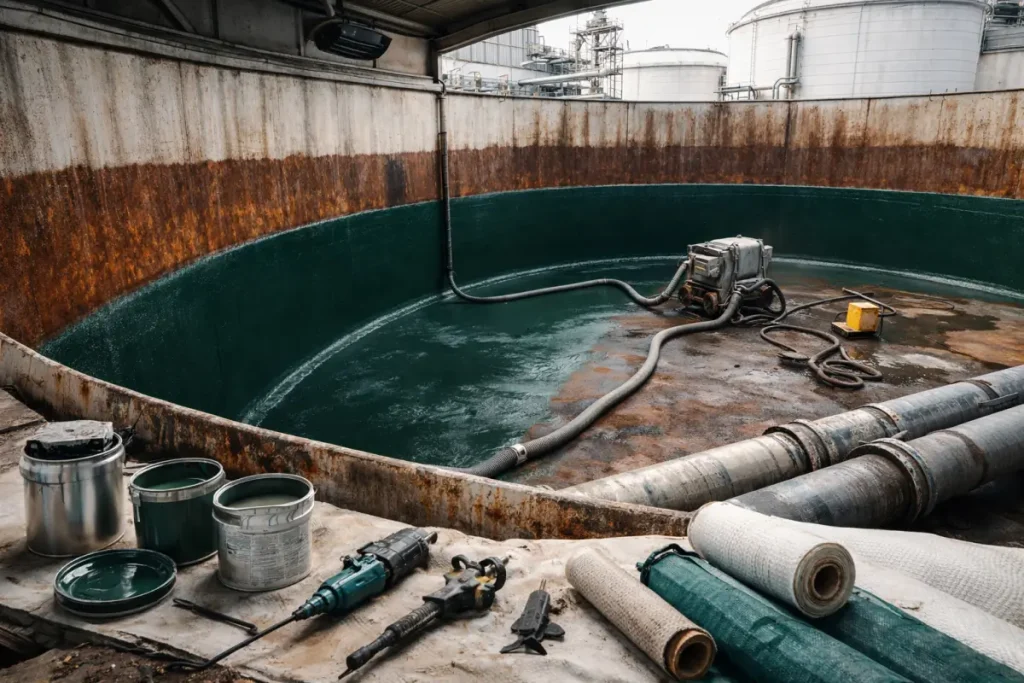
Maintenance requirements vary between above-ground and underground containment systems. Above-ground systems usually allow easier visual inspections and servicing access.
Underground systems may require additional leak monitoring and infrastructure assessments. Many facilities compare above-ground vs underground fuel spill tanks when planning long-term maintenance strategies.
Common Fuel Spill Tank Maintenance Problems
Several issues commonly affect fuel spill containment systems.
Common problems include:
- Corrosion
- Fuel leaks
- Blocked drainage systems
- Structural cracking
- Damaged pipe connections
- Contaminated containment areas
Early detection helps reduce repair costs and environmental risks. Routine maintenance also supports safer long-term fuel storage operations.
Benefits of Routine Fuel Spill Tank Maintenance
Scheduled maintenance offers several operational and environmental benefits.
Common benefits include:
- Improved system reliability
- Reduced spill risks
- Better environmental protection
- Lower repair costs
- Lower repair costs
- Safer fuel storage
- Longer system lifespan
Many facilities also use industrial fuel spill containment systems to support broader site protection strategies.
Creating a Preventative Maintenance Plan
Preventative maintenance planning helps reduce unplanned system failures.
A maintenance plan should include:
- Inspection schedules
- Maintenance records
- Leak monitoring procedures
- Drainage inspections
- Emergency response planning
Consistent servicing improves long-term containment performance and operational safety.
Final Thoughts
Routine fuel spill tank maintenance plays an important role in environmental protection and fuel storage safety. Regular inspections help identify problems early and improve long-term containment reliability.
Industrial facilities should follow structured maintenance procedures to reduce operational and environmental risks.
