
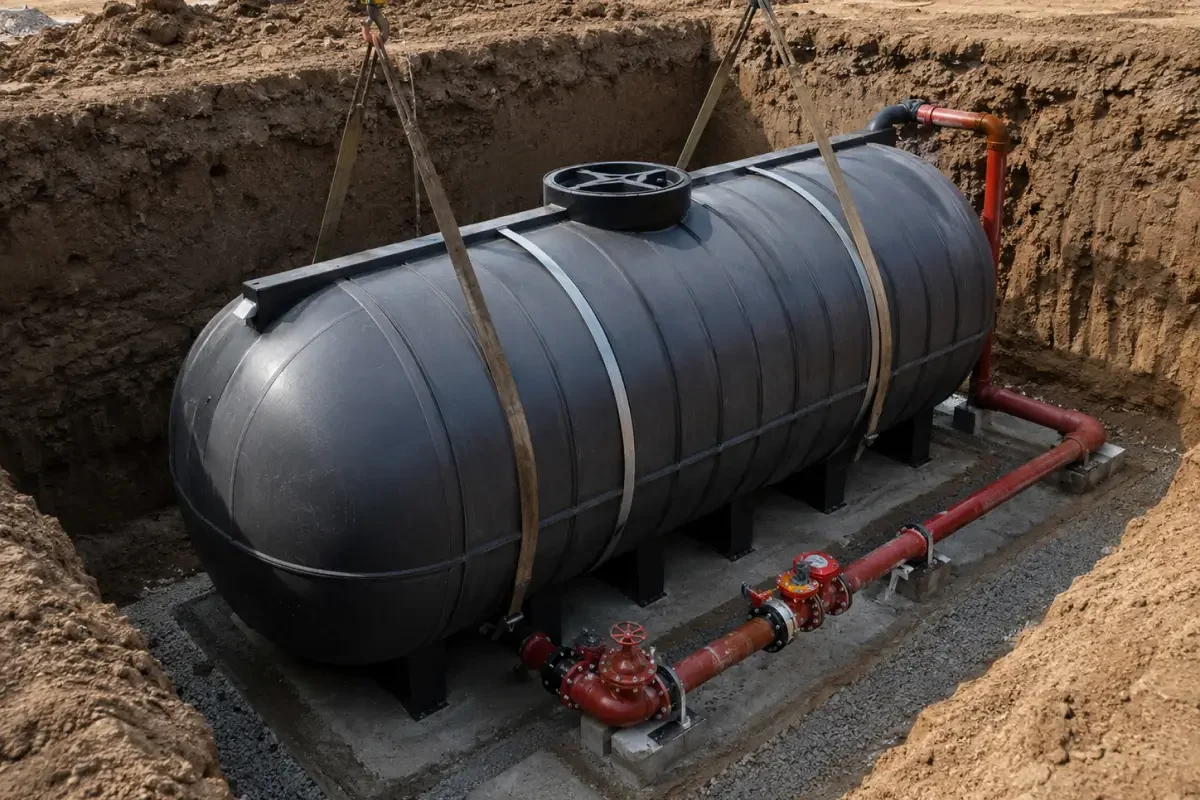
Underground fire water tanks play a critical role in fire protection systems across Australia. They provide a reliable water supply when mains water is unavailable or insufficient. These tanks are commonly installed at industrial facilities, commercial buildings, warehouses, residential developments, and remote sites.
Compliance with Australian Standards is essential for ensuring system reliability and regulatory approval. Several standards govern the design, construction, installation, testing, and maintenance of underground fire water storage systems.
This guide explains the key Australian Standards that apply to underground fire water tanks and outlines the main compliance requirements.
Why Underground Fire Water Tanks are Important
Fire protection systems depend on a secure water supply during emergencies. Underground tanks offer several advantages over above-ground storage solutions.
Key benefits include:
- Protection from extreme weather conditions
- Reduced visual impact on the site
- Better temperature stability
- Efficient use of available land
- Lower exposure to accidental damage
Many developments choose underground fire water tanks when site space is limited or aesthetic considerations are important.
Regulatory Framework in Australia
Australian fire water storage systems must comply with a combination of national standards, building regulations, and local authority requirements.
The primary regulatory framework includes:
- National Construction Code (NCC)
- Australian Standards
- State and territory fire authority requirements
- Local council planning conditions
- Insurance provider requirements
Project owners should verify all applicable requirements before selecting a tank design.
Australian Standard AS 2419.1
One of the most important standards affecting underground fire water tanks is AS 2419.1.
AS 2419.1 Fire Hydrant Installations
AS 2419.1 provides requirements for fire hydrant systems throughout Australia. The standard establishes minimum water supply criteria and performance expectations.
Key areas covered include:
- Water storage capacity
- Hydrant flow rates
- Water supply reliability
- Pump requirements
- System performance testing
When a municipal water supply cannot meet required fire flows, a dedicated underground fire water tank may be required.
The storage volume must support the duration and flow rates specified by the hydrant system design.
Australian Standard AS 2304
AS 2304 Water Storage Tanks for Fire Protection Systems
AS 2304 is the primary Australian Standard for fire protection water storage tanks.
The standard applies to tanks supplying:
- Fire hydrant systems
- Fire sprinkler systems
- Water spray systems
- Combined fire protection systems
AS 2304 outlines requirements for:
- Tank design
- Structural integrity
- Water quality
- Access provisions
- Inspection requirements
- Suction arrangements
- Overflow systems
Although the standard covers various tank configurations, underground tanks must still satisfy the performance requirements specified within the document.
Australian Standard AS/NZS 3500
Plumbing and Drainage Requirements
AS/NZS 3500 regulates plumbing and drainage installations.
Underground fire water tanks often require compliance with sections covering:
- Pipework installation
- Backflow prevention
- Water supply connections
- Drainage arrangements
- Overflow discharge systems
Proper integration between the tank and site infrastructure is essential for long-term reliability.
National Construction Code Requirements
The National Construction Code establishes minimum performance standards for Australian buildings.
Depending on the building classification, the NCC may require:
- Fire hydrant systems
- Fire sprinkler systems
- Dedicated water storage
- Fire brigade access
- Emergency water supplies
Underground fire water tanks are frequently installed to satisfy these requirements where town water supplies cannot provide adequate fire flow capacity.
The NCC often references Australian Standards as the acceptable means of compliance.
Water Storage Capacity Requirements
One of the most important design considerations is storage capacity.
The required volume depends on several factors:
- Building classification
- Fire risk level
- Occupancy type
- Hydrant demand
- Sprinkler demand
- Fire authority requirements
Storage capacities can range from tens of thousands of litres to several million litres. The final volume should always be determined by a qualified fire protection engineer.
Common Capacity Considerations
Designers typically evaluate:
- Required firefighting duration
- Simultaneous system operation
- Pump performance
- Reserve capacity
- Future site expansion
Undersized tanks may fail to meet compliance requirements during emergencies.
Structural Design Requirements
Underground tanks must withstand significant external loads. Unlike above-ground tanks, buried structures experience pressure from surrounding soil and surface traffic.
Structural design must consider:
- Soil conditions
- Groundwater levels
- Vehicle loads
- Settlement risks
- Buoyancy forces
- Seismic considerations
Engineers generally perform site-specific assessments before finalising tank specifications.
Materials Used in Underground Fire Water Tanks
Several materials are commonly used in Australia.
Reinforced Concrete Tanks
Reinforced concrete remains one of the most popular choices.
Advantages include:
- High durability
- Long service life
- Excellent structural strength
- Large storage capacity options
Concrete tanks are often used for major commercial and industrial projects.
Fibreglass Tanks
Fibreglass tanks offer corrosion resistance and relatively simple installation.
Benefits include:
- Lightweight construction
- Corrosion resistance
- Factory-controlled manufacturing
- Reduced installation time
These tanks are commonly used for smaller installations.
Polyethylene Tanks
Polyethylene systems are sometimes used for underground applications when appropriately designed.
Advantages include:
- Corrosion resistance
- Lightweight structure
- Lower installation costs
However, not all polyethylene tanks are suitable for underground fire protection use.
Water Quality Considerations
Stored water must remain suitable for firefighting operations.
Water quality management helps prevent:
- Sediment accumulation
- Biological growth
- Pipe blockages
- Pump damage
Design features often include:
- Sediment control measures
- Drainage points
- Inspection access
- Water circulation systems
Regular inspections help maintain water quality over time.
Tank Access and Inspection Requirements
Australian Standards require safe access for inspection and maintenance activities.
Typical requirements include:
- Access hatches
- Internal inspection points
- Ventilation systems
- Safe entry procedures
- Maintenance access routes
These features allow routine condition assessments without major excavation work.
Fire Pump Integration
Underground tanks frequently operate alongside fire pumps. The pump system must maintain adequate pressure and flow during emergencies.
Design considerations include:
- Pump suction arrangements
- Minimum water levels
- Anti-vortex devices
- Backup power systems
- Pump room accessibility
Improper pump integration can significantly reduce system performance.
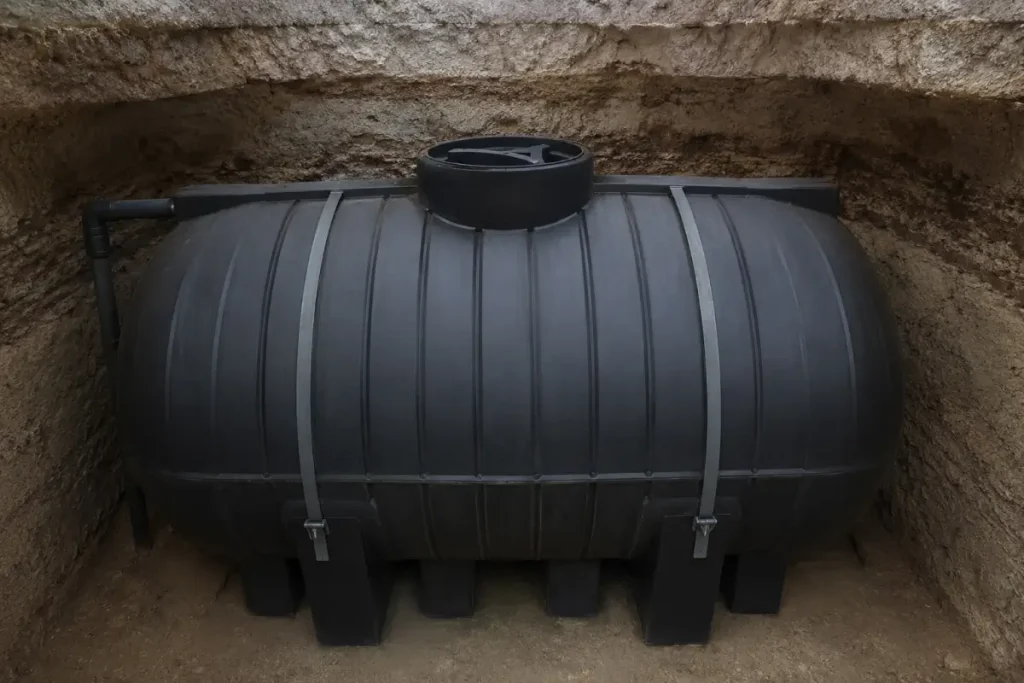
Overflow and Drainage Requirements
Every underground fire water tank requires a properly designed overflow system.
Overflow arrangements help prevent:
- Structural damage
- Site flooding
- Erosion
- Water contamination
Drainage systems should safely direct excess water away from critical infrastructure. Local authorities may impose additional drainage requirements depending on site conditions.
Installation Requirements
Proper installation is essential for achieving long-term performance.
Key installation factors include:
- Excavation quality
- Foundation preparation
- Bedding materials
- Backfilling procedures
- Compaction requirements
Poor installation practices can lead to settlement, cracking, or structural failure.
Site Investigation
Before installation, engineers typically assess:
- Soil classification
- Groundwater conditions
- Existing services
- Traffic loads
- Environmental constraints
These assessments influence both tank selection and construction methods.
Testing and Commissioning
New underground fire water tanks should undergo comprehensive testing before becoming operational.
Commissioning activities may include:
- Leak testing
- Structural inspections
- Pump performance testing
- Flow testing
- Control system verification
Testing confirms that the installation meets design specifications and regulatory requirements.
Maintenance Expectations
Although underground tanks require less visual maintenance than exposed systems, they still require ongoing attention.
Routine maintenance programs typically include:
- Internal inspections
- Water quality assessments
- Sediment removal
- Valve testing
- Pump testing
- Structural condition reviews
Maintenance schedules should align with relevant Australian Standards and site-specific risk requirements.
Common Compliance Challenges
Many projects encounter compliance issues during design or installation.
Common problems include:
- Insufficient storage capacity
- Inadequate access provisions
- Incorrect pump selection
- Poor drainage design
- Structural under-design
- Incomplete documentation
Early engagement with fire engineers can help avoid costly modifications later.
Working with Fire Authorities
State and territory fire authorities may impose additional requirements beyond national standards. Project teams should consult relevant authorities during the planning phase.
Requirements may vary depending on:
- Building use
- Hazard classification
- Occupancy levels
- Geographic location
Obtaining approval early can streamline project delivery.
Future Trends in Underground Fire Water Storage
The fire protection industry continues to evolve.
Emerging trends include:
- Smart monitoring systems
- Remote water level monitoring
- Leak detection technology
- Advanced corrosion protection
- Sustainable water management strategies
Conclusion
Australian Standards provide a comprehensive framework for the design and operation of underground fire water tanks. Compliance ensures that fire protection systems have reliable access to water during emergencies.
Standards such as AS 2419.1, AS 2304, AS/NZS 3500, and the National Construction Code all influence system requirements. Together, they establish expectations for storage capacity, structural performance, installation quality, and ongoing maintenance.
Proper planning, engineering design, and compliance management are essential for achieving a safe and effective fire water storage solution. By understanding the relevant Australian Standards, building owners and project teams can ensure their underground fire water tanks deliver dependable performance throughout their service life.
