Stormwater tanks play a vital role in managing runoff and protecting drainage infrastructure from excessive stormwater flows. Over time, however, sediment, debris, corrosion, and structural wear can affect their performance. Without regular inspections, these issues may remain unnoticed until they begin to impact the efficiency and reliability of the entire stormwater system.
A structured stormwater tank inspection checklist helps ensure every critical component is assessed during an inspection. Rather than relying on visual observations alone, inspectors follow a consistent process to evaluate structural integrity, hydraulic performance, sediment accumulation, safety features, and operational condition.
Inspection checklists also support effective maintenance planning. By documenting the condition of each asset, property owners and facility managers can prioritise maintenance activities, schedule repairs, and reduce the likelihood of unexpected failures.
This guide explains what a stormwater tank inspection involves, what should be included in a professional inspection checklist, which inspection methods are commonly used, and how inspection findings support long-term stormwater asset management.
What is a Stormwater Tank Inspection?
A stormwater tank inspection is a structured assessment used to evaluate the condition, performance, and integrity of stormwater storage infrastructure. The purpose is to identify defects, assess operational performance, and determine whether maintenance or repairs are required.
Unlike maintenance, which focuses on cleaning and servicing the system, an inspection evaluates its current condition.
A professional inspection typically assesses:
- Structural integrity
- Sediment accumulation
- Water flow
- Inlet and outlet conditions
- Internal components
- Safety features
- Signs of deterioration
- Hydraulic performance
The results are documented in an inspection report, which helps guide future maintenance and asset management decisions.
If your stormwater system requires a professional condition assessment, learn more about our stormwater tank inspection services and comprehensive inspection solutions.
Why Use a Stormwater Tank Inspection Checklist?
A checklist provides a systematic approach to inspections. It ensures that every important component is assessed, regardless of the size or type of the stormwater system.
Using a standard checklist helps inspectors remain consistent while making inspection reports easier to compare over time.
The benefits include:
- Consistent inspection procedures
- Reduced risk of overlooking defects
- Better documentation
- Improved maintenance planning
- More reliable condition assessments
- Support for long-term asset management
- Easier monitoring of asset deterioration
Rather than depending on memory, inspectors follow a structured process that improves both accuracy and reporting quality.
How Stormwater Tank Inspections Support Maintenance
Stormwater tank inspections and maintenance work together but serve different purposes.
An inspection answers one important question:
What is the current condition of the system?
Maintenance answers another:
What actions are required to preserve or restore performance?
| Stormwater Tank Inspection | Stormwater Tank Maintenance |
|---|---|
| Evaluates asset condition | Restores system performance |
| Identifies defects | Removes sediment and debris |
| Documents deterioration | Services system components |
| Supports maintenance planning | Prevents future deterioration |
| Produces inspection reports | Extends asset life |
Inspection findings often determine when maintenance should be scheduled. For example, inspectors may identify excessive sediment accumulation, blocked outlets, or early signs of corrosion. These findings allow maintenance teams to address issues before they affect system performance or require major repairs.
Together, inspections and maintenance form the basis of an effective stormwater asset management program. To learn how inspection findings translate into ongoing care, read our stormwater tank maintenance guide for practical maintenance strategies and best practices.
What Does a Stormwater Tank Inspection Checklist Include?
A professional inspection follows a structured checklist to ensure every critical component of the stormwater tank is assessed. While the exact scope depends on the system design and site conditions, most inspections cover the following areas.
Structural Condition
The overall condition of the tank structure is assessed first.
Inspectors look for:
- Cracks
- Concrete deterioration
- Corrosion
- Surface damage
- Joint movement
- Signs of settlement
- Structural deformation
Identifying these issues early helps prevent more significant damage and supports timely maintenance planning.
Sediment Accumulation
Sediment naturally settles at the bottom of stormwater tanks over time.
During the inspection, the following may be assessed:
- Sediment depth
- Distribution throughout the tank
- Impact on storage capacity
- Evidence of excessive accumulation
If sediment levels exceed acceptable limits, maintenance recommendations are typically included in the inspection report.
Debris Build-Up
Stormwater often carries leaves, litter, branches, and other debris into the storage system.
Inspectors assess whether debris is:
- Restricting water flow
- Blocking outlet structures
- Accumulating near inlets
- Affecting hydraulic performance
Removing debris is often one of the first maintenance actions recommended following an inspection.
Inlet Structures
Inlets are inspected to ensure stormwater can enter the system without restriction.
The inspection may identify:
- Blockages
- Damage
- Sediment build-up
- Signs of erosion
- Deteriorated connections
Maintaining clear inlets helps preserve the designed flow capacity of the system.
Outlet Structures
Outlet structures regulate how water leaves the tank.
Inspectors check for:
- Blockages
- Damage
- Restricted flow
- Signs of wear
- Operational performance
Any restriction at the outlet can affect how the detention or storage system performs during rainfall events.
Overflow Systems
Overflow structures provide an additional level of protection during major storm events.
Inspections verify that overflow components remain:
- Accessible
- Free from obstructions
- Structurally sound
- Capable of operating as designed
Pipe Connections
Pipework connecting the stormwater tank to the wider drainage network is also inspected.
Typical observations include:
- Joint condition
- Alignment
- Leakage
- Blockages
- Root intrusion where applicable
Internal Corrosion and Material Deterioration
Different construction materials experience different forms of deterioration.
Depending on the tank design, inspectors may assess:
- Steel corrosion
- Protective coating condition
- Concrete spalling
- Exposed reinforcement
- Chemical attack
- Surface erosion
These observations help determine whether repairs or further monitoring are required.
Water Levels and Drainage Performance
Water remaining inside the tank for unusually long periods may indicate operational issues.
Inspectors assess:
- Water levels
- Drainage behaviour
- Flow restrictions
- Outlet performance
These observations help confirm whether the system is functioning as intended.
Safety Features
Stormwater tanks often qualify as confined spaces.
Safety inspections typically include:
- Access hatches
- Ladders
- Handrails
- Safety barriers
- Locking mechanisms
- Warning signage
Safe access is essential for future inspections and maintenance activities.
Signs of Leakage or Ground Movement
Inspectors also look for evidence that may indicate structural movement or water escaping from the system.
Common observations include:
- Damp areas
- Water staining
- Soil erosion
- Settlement around the tank
- Surface cracking
- Misaligned structures
These issues may require further engineering assessment.
Photographic Documentation
Photographs form an important part of modern inspection reports.
Images help document:
- Existing defects
- Sediment levels
- Structural condition
- Maintenance priorities
- Changes since previous inspections
This visual record supports long-term asset management.
Inspection Report
Every professional inspection should conclude with a detailed report.
The report commonly includes:
- Inspection summary
- Observed defects
- Photographic evidence
- Condition assessment
- Risk observations
- Maintenance recommendations
- Repair recommendations where appropriate
- Suggested inspection intervals
The inspection report becomes a valuable reference for future inspections, maintenance planning, and lifecycle management of the stormwater asset.
Methods Used During Stormwater Tank Inspections
Stormwater tank inspections can be performed using several methods, depending on the tank’s size, accessibility, water level, and overall condition. Modern inspection technologies allow inspectors to assess assets safely while minimising disruption to site operations.
Many inspection programs combine multiple techniques to provide a comprehensive assessment of the stormwater system.
Visual Inspections
Visual inspections are the most common inspection method and are often the starting point for condition assessments. Inspectors examine accessible areas of the tank to identify visible defects and assess the overall condition of the asset.
A visual inspection may include:
- Structural observations
- Sediment assessment
- Debris accumulation
- Signs of corrosion
- Concrete deterioration
- Water level observations
- Inspection of inlets and outlets
- Safety feature assessment
Visual inspections are suitable when safe access is available and critical components can be viewed directly.
CCTV Inspections
Closed-circuit television (CCTV) inspections provide a detailed view of internal pipework and confined areas that cannot be safely inspected from the surface. High-definition cameras travel through drainage pipes and connecting infrastructure to identify defects without excavation.
CCTV inspections can detect:
- Pipe blockages
- Sediment deposits
- Cracks
- Joint displacement
- Root intrusion
- Internal deterioration
- Flow restrictions
This method is commonly used for underground stormwater networks connected to storage tanks.
ROV Inspections
Remote Operated Vehicles (ROVs) allow inspectors to assess flooded or difficult-to-access stormwater tanks without requiring personnel to enter confined spaces. Equipped with high-resolution cameras, lighting, and manoeuvrable controls, ROVs provide detailed footage of submerged structures and internal components.
ROV inspections are particularly useful for:
- Large underground tanks
- Permanently flooded systems
- Deep detention tanks
- Tanks with restricted access
- Hazardous environments
Using ROV technology improves safety while providing accurate condition assessments.
Underwater Drone Inspections
Underwater drones have become an increasingly valuable inspection tool for stormwater infrastructure. These remotely operated systems capture high-quality video and images while navigating submerged sections of the tank.
Underwater drone inspections help assess:
- Structural condition below the waterline
- Sediment accumulation
- Internal walls
- Floors
- Outlet structures
- Submerged pipe connections
Because tanks often remain operational during inspections, underwater drones reduce the need for draining the system before assessment.
Aerial Drone Inspections
Aerial drones are used to inspect external stormwater infrastructure that may be difficult to access safely from the ground. They provide a fast overview of surrounding assets and help inspectors identify visible issues before detailed inspections begin.
Drone surveys may include:
- Tank roofs
- Access covers
- Ventilation structures
- Overflow locations
- Surrounding drainage infrastructure
- Surface settlement
- Vegetation around access points
High-resolution imagery also improves inspection documentation and reporting.
Stormwater Detention Tank Inspections
Stormwater detention tanks require inspections that focus on both structural condition and hydraulic performance. Unlike retention tanks, detention systems are designed to temporarily store stormwater before releasing it at a controlled rate.
Any reduction in storage capacity or restriction within the outlet structure can affect how the system performs during heavy rainfall.
A typical stormwater detention tank inspection may include:
- Assessment of detention storage capacity
- Inspection of outlet control devices
- Sediment measurements
- Inspection of overflow structures
- Inlet and outlet condition assessments
- Flow path inspections
- Structural observations
- Debris assessments
- Performance of flow control systems
Regular inspections help confirm that detention systems continue operating according to their original design.
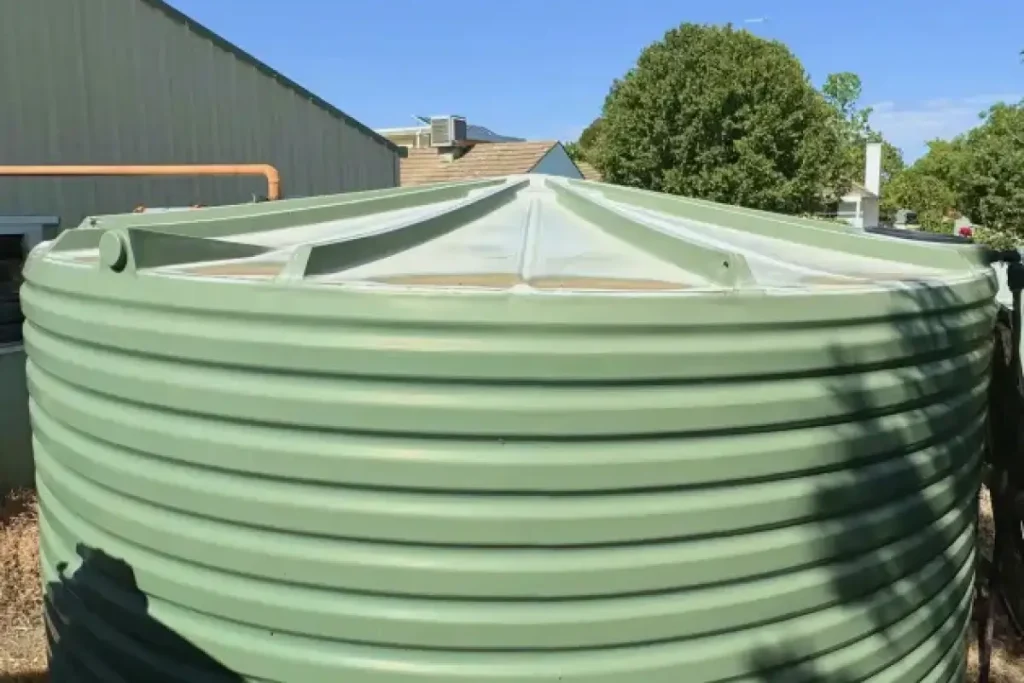
Types of Stormwater Tanks That Require Inspection
Most stormwater storage assets benefit from routine condition assessments, regardless of their construction material or intended function.
Common systems include:
- Underground concrete stormwater tanks
- Stormwater detention tanks
- Stormwater retention tanks
- Modular stormwater storage systems
- HDPE stormwater tanks
- Steel stormwater tanks
- Concrete vaults
- Underground storage chambers
- Gross Pollutant Traps (GPTs)
- Pump stations connected to stormwater infrastructure
Although inspection procedures vary slightly between systems, the overall objective remains the same: assessing asset condition, identifying deterioration, and supporting effective maintenance planning.
Common Issues Identified During Stormwater Tank Inspections
A thorough inspection can reveal a wide range of issues that may affect the performance, safety, or longevity of a stormwater tank. Identifying these problems early allows maintenance or repairs to be planned before more significant deterioration occurs.
Some of the most common inspection findings include the following.
Excessive Sediment Build-Up
Sediment is one of the most frequently identified issues during stormwater tank inspections. As sediment accumulates, it reduces the effective storage volume of the tank and may interfere with hydraulic performance during heavy rainfall.
Blocked Inlets and Outlets
Leaves, litter, and other debris can partially or completely block water flow. Restricted inlets or outlets may reduce drainage efficiency and increase the likelihood of overflow during storm events.
Structural Cracks
Concrete tanks may develop cracks due to settlement, ageing, or environmental conditions. Although some surface cracking may be minor, larger defects should be assessed to determine whether repairs are required.
Corrosion
Steel tanks and metal components are inspected for signs of corrosion. Surface corrosion may indicate protective coating failure, while advanced corrosion can affect structural integrity if left untreated.
Concrete Deterioration
Inspectors also assess concrete surfaces for:
- Spalling
- Surface erosion
- Exposed reinforcement
- Joint deterioration
- Signs of chemical attack
These observations help determine the overall condition of the structure.
Water Leaks
Evidence of leakage may indicate damaged joints, cracks, or deteriorated seals. Leaks can reduce system performance while contributing to soil movement around the tank.
Flow Restrictions
Sediment, debris, damaged pipework, or deteriorated outlet structures may restrict water movement through the system. These restrictions often reduce the efficiency of detention tanks during peak rainfall events.
Biological Growth
Algae, biofilm, and excessive vegetation may develop in damp environments. Although some biological growth is expected, excessive accumulation can affect inspections and contribute to maintenance requirements.
What Happens after the Inspection?
Completing the inspection is only one part of the asset management process. The information collected during the assessment is used to determine the next steps for maintaining the stormwater system.
A professional inspection is typically followed by a detailed report that documents the condition of the asset and outlines any recommended actions.
The report may include:
- A summary of inspection findings
- Photographic evidence
- Condition ratings
- Identified defects
- Sediment observations
- Structural assessments
- Maintenance recommendations
- Repair recommendations where required
- Suggested inspection intervals
Property owners and facility managers can use this information to prioritise maintenance activities and allocate resources more effectively. Where only minor issues are identified, routine maintenance may be sufficient to restore system performance.
If significant deterioration is discovered, further engineering assessment or repair work may be recommended before the asset continues operating under normal conditions.
After the inspection is complete, professional stormwater tank maintenance helps address identified issues and restore system performance.
Benefits of Using a Stormwater Tank Inspection Checklist
A structured inspection checklist improves both the quality and consistency of stormwater tank inspections. Rather than relying on individual observations alone, inspectors follow a repeatable process that supports more reliable condition assessments.
Some of the key benefits include:
Improves Inspection Consistency
Every inspection follows the same structured process, reducing the likelihood that important components will be overlooked.
Supports Better Maintenance Planning
Inspection findings help determine when cleaning, sediment removal, or repairs should be scheduled. This allows maintenance to be based on the actual condition of the asset rather than fixed time intervals.
Extends Asset Life
Early identification of defects allows issues to be addressed before they contribute to more extensive deterioration. Preventive maintenance generally costs less than major repairs or asset replacement.
Improves Documentation
Inspection reports create a historical record of the tank’s condition. Comparing reports over time helps asset owners monitor deterioration and evaluate long-term performance.
Reduces Operational Risks
Regular inspections identify developing issues before they affect system performance during major storm events. This reduces the likelihood of unexpected failures and emergency maintenance.
Supports Asset Management
Inspection data contributes to long-term lifecycle planning and helps organisations make informed investment decisions regarding stormwater infrastructure.
Who Should Carry out Stormwater Tank Inspections?
Stormwater tank inspections benefit a wide range of organisations responsible for managing drainage infrastructure.
Regular inspections are commonly carried out for:
- Commercial buildings
- Industrial facilities
- Shopping centres
- Residential developments
- Government infrastructure
- Schools and universities
- Hospitals
- Transport facilities
- Utility providers
Property owners, facility managers, asset managers, and infrastructure operators all rely on inspection data to maintain safe and reliable stormwater systems. Regardless of the site, inspections should be performed by suitably qualified personnel using appropriate equipment and safe inspection procedures.
Conclusion
A well-designed stormwater tank inspection checklist provides a structured approach to assessing the condition and performance of stormwater infrastructure. By evaluating structural integrity, sediment levels, hydraulic components, and safety features, inspections help identify issues before they develop into costly repairs or operational failures.
Modern inspection methods, including CCTV systems, ROVs, underwater drones, and aerial drones, have also improved the safety and accuracy of stormwater tank assessments. These technologies allow inspectors to access confined or submerged areas while minimising disruption to normal operations.
When inspection findings are combined with planned maintenance, property owners and asset managers can extend the service life of stormwater systems, improve hydraulic performance, and make better-informed decisions about future maintenance and repairs.
