

Fuel spill tanks help protect industrial sites from fuel leaks, environmental damage and compliance risks. Proper fuel spill containment reduces the risk of groundwater contamination and operational disruption.
Fuel storage systems used across Australia must meet strict containment and environmental requirements. Understanding fuel spill tank requirements helps businesses improve safety and long-term system performance.
Why Fuel Spill Containment Matters
Fuel spills can create serious environmental and operational problems. Even small leaks may contaminate surrounding soil, drainage systems and groundwater. Fuel spill containment systems help control leaks before major damage occurs.
Proper containment also supports safer fuel handling and storage practices. Industrial facilities, transport depots and infrastructure projects commonly require spill containment solutions.
Many sites also use fuel spill containment tanks to support safer long-term fuel storage.
Common Fuel Spill Tank Requirements
Fuel spill containment requirements vary depending on site conditions and fuel storage volumes. However, several requirements are commonly considered across commercial and industrial projects.
Secondary Containment
Fuel spill tanks often require secondary containment systems. Secondary containment helps capture leaks, overflow and accidental spills.
Containment systems may include bunds, containment pits or integrated storage designs.
Tank Capacity
Containment capacity should suit expected fuel storage volumes and operational requirements. Undersized containment systems increase environmental and safety risks.
Larger industrial sites often require custom containment configurations.
Material Durability
Fuel spill tanks must withstand harsh environmental and operating conditions. Common tank materials include reinforced concrete, polyethylene and steel systems.
Durable construction improves long-term containment reliability. Many facilities also use industrial fuel spill containment systems designed for demanding operating environments.
Safe Access and Maintenance
Fuel containment systems should allow safe inspection and maintenance access. Restricted access may increase servicing difficulties and long-term operational risks.
Regular inspections help identify issues before failures occur. Some operators also follow structured fuel spill tank maintenance checklist procedures for ongoing system monitoring.
Environmental Protection Requirements
Fuel spill containment systems help reduce environmental contamination risks. Poor containment may allow fuel to enter nearby waterways, drainage systems and surrounding land.
Environmental protection measures often include:
- Secondary containment systems
- Leak monitoring
- Drainage controls
- Spill response planning
- Routine inspections
- Scheduled maintenance
Many industrial projects also integrate containment systems with broader environmental infrastructure. This may include gross pollutant traps and stormwater management systems.
Above-Ground and Underground Requirements
Containment requirements often differ between above-ground and underground fuel systems. Above-ground tanks usually provide easier inspection and maintenance access.
Underground systems may require additional monitoring and secondary containment protection. Site conditions, fuel volumes and operational risks influence containment design decisions.
Many infrastructure projects compare above-ground vs underground fuel spill tanks during planning stages.
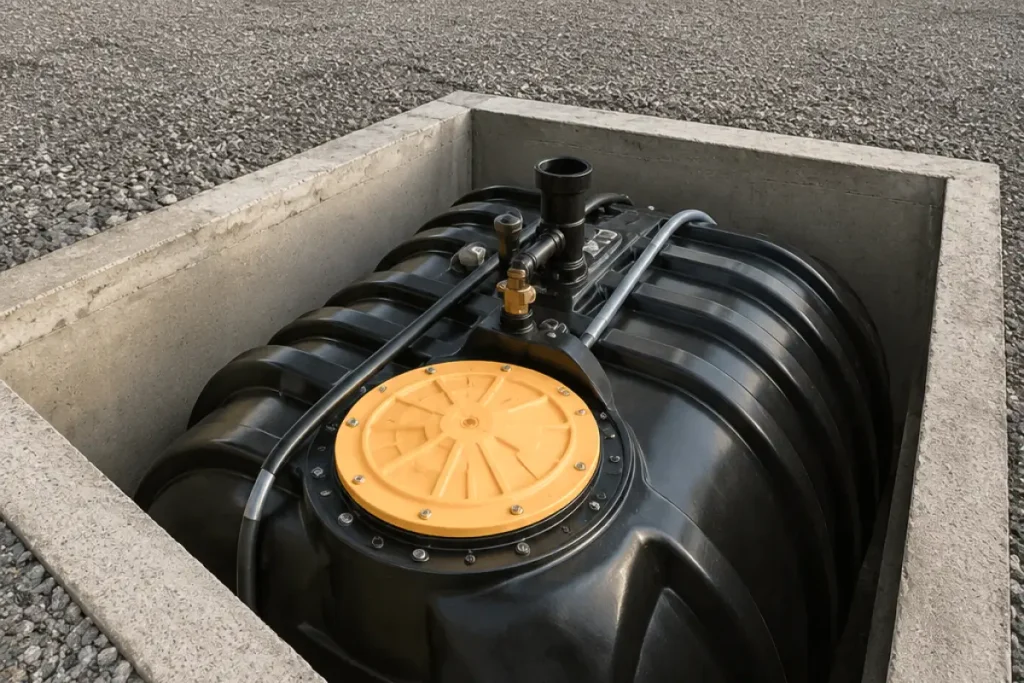
Fuel Spill Tank Inspections
Routine inspections support safer fuel storage and improved containment performance. Inspections may identify corrosion, structural damage, leaks or drainage problems.
Common inspection areas include:
- Tank integrity
- Pipe connections
- Containment capacity
- Drainage systems
- Access points
- Spill protection components
Regular inspections help reduce costly system failures and environmental risks.
Compliance and Site Planning
Fuel spill containment planning should begin before installation. Proper planning helps reduce future operational and compliance problems.
Factors commonly considered during planning include:
- Fuel storage capacity
- Site drainage
- Vehicle access
- Environmental exposure
- Maintenance access
- Emergency response requirements
Choosing the Right Fuel Spill Tank
Different industries require different containment solutions. Fuel spill tanks used at transport depots may differ from systems used at industrial facilities or infrastructure sites.
Choosing the right containment system depends on:
- Fuel type
- Storage volume
- Site layout
- Environmental risks
- Compliance requirements
- Maintenance access
Custom containment systems are often required for complex projects.
Final Thoughts
Fuel spill tank requirements play an important role in environmental protection and operational safety. Proper containment systems help reduce fuel spill risks and improve long-term storage reliability.
Understanding containment requirements also supports safer site planning and ongoing system maintenance. Businesses should assess fuel storage risks carefully before selecting a containment solution.
