

Industrial sites often store large fuel volumes for vehicles, equipment and operational systems. Without proper containment, fuel spills may create serious environmental and operational risks.
Fuel spill containment systems help reduce contamination risks and support safer fuel storage practices. Many industrial facilities rely on containment infrastructure for long-term operational safety.
Why Industrial Fuel Spill Containment Matters
Industrial fuel spills may affect surrounding land, stormwater systems and groundwater. Even small leaks can create costly environmental and infrastructure problems.
Proper containment helps reduce cleanup costs and operational disruption. Containment systems also improve safety across high-risk industrial environments.
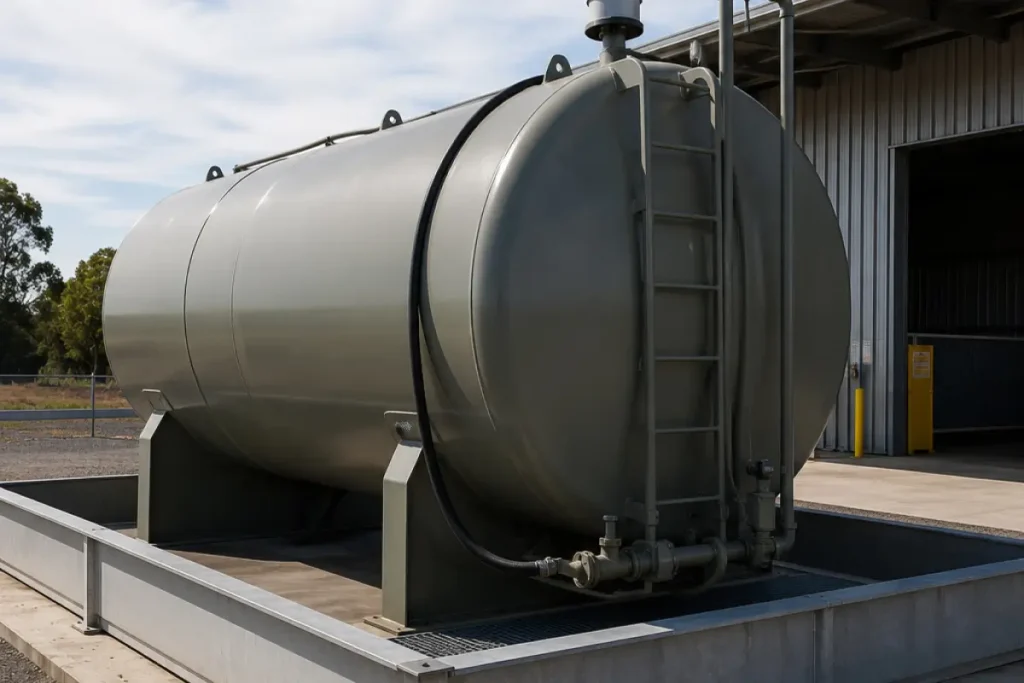
Many facilities use fuel spill tanks to support safer fuel storage and environmental protection.
Common Industrial Sites Using Fuel Spill Containment
Fuel spill containment tanks are widely used across industrial and commercial sectors.
Common applications include:
- Mining operations
- Transport depots
- Infrastructure projects
- Agricultural facilities
- Manufacturing plants
- Fuel storage terminals
Each site may require different containment configurations and storage capacities. Industrial containment planning often depends on fuel usage and operational risks.
Key Risks of Poor Fuel Containment
Poor fuel containment may create long-term environmental and operational problems.
Common risks include:
- Soil contamination
- Groundwater pollution
- Stormwater contamination
- Infrastructure damage
- Compliance issues
- Increased cleanup costs
Industrial sites handling large fuel volumes often require stronger containment protection measures. Many businesses review fuel spill tank requirements during early project planning stages.
Types of Fuel Spill Containment Systems
Industrial sites use different containment systems depending on storage requirements and site conditions. The most common systems include above-ground and underground containment tanks.
Above-Ground Systems
Above-ground containment systems are easier to inspect and maintain. They often allow faster leak detection and maintenance access.
These systems are commonly used at transport depots and industrial facilities. Some operators compare above-ground vs underground fuel spill tanks before selecting a containment solution.
Underground Systems
Underground containment systems are often used where surface space is limited. These systems may improve traffic flow and infrastructure layout flexibility.
Environmental Protection Measures
Industrial fuel containment systems often support broader environmental management strategies.
Environmental protection measures may include:
- Secondary containment
- Leak monitoring
- Drainage controls
- Spill response planning
- Routine inspections
- Scheduled maintenance
Many industrial facilities also integrate gross pollutant traps into stormwater protection systems. Proper environmental planning helps reduce contamination risks across industrial sites.
Fuel Spill Tank Maintenance for Industrial Sites
Routine maintenance helps improve containment performance and long-term reliability. Poorly maintained systems may increase spill risks and operational downtime.
Regular servicing may include:
- Tank inspections
- Leak monitoring
- Structural assessments
- Pipe inspections
- Drainage checks
Many operators follow a structured fuel spill tank maintenance checklist to improve ongoing system monitoring.
Factors to Consider Before Installation
Several factors influence industrial fuel spill containment planning.
Important considerations include:
- Fuel storage volume
- Site layout
- Vehicle access
- Environmental exposure
- Maintenance access
- Compliance requirements
Containment systems should support both operational efficiency and environmental protection. Custom containment solutions are often required for high-risk industrial environments.
Choosing the Right Industrial Fuel Containment System
Different industries require different containment approaches. Mining operations may require large-scale containment infrastructure. Transport facilities often prioritise maintenance access and operational efficiency.
Infrastructure projects may require integrated underground containment systems. The right containment solution depends on site conditions, operational risks and long-term storage requirements.
Final Thoughts
Fuel spill containment plays an important role in industrial site safety and environmental protection. Proper containment systems help reduce operational risks and improve long-term fuel storage reliability.
Industrial facilities should assess storage risks carefully before selecting a containment system.
